Menu

AI Sites

Alongside this blog I've been building small, focused websites with AI — one site per topic, each with its own voice and design. They're experiments in working with a model rather than just prompting one: I bring the questions and the editorial judgement, the AI helps with the drafting, the structure, and the code. Here are the ones worth visiting. I write about how they came to be in this article.

The sites

image
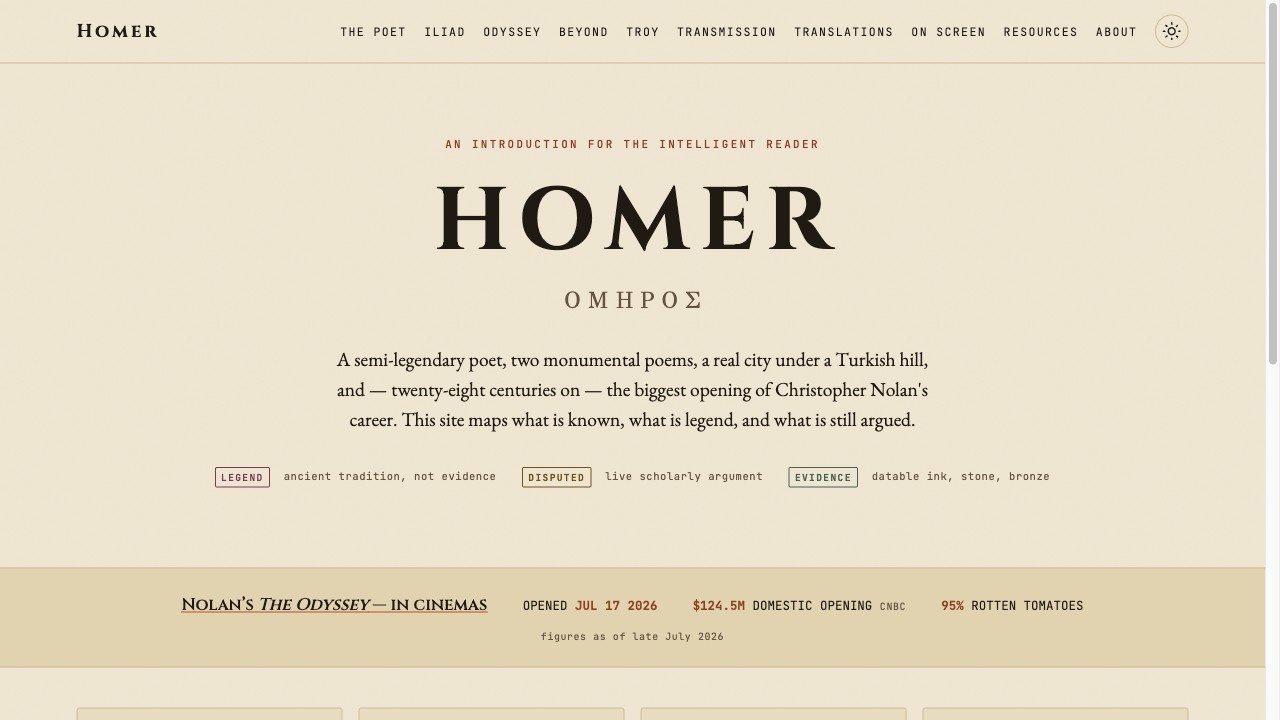
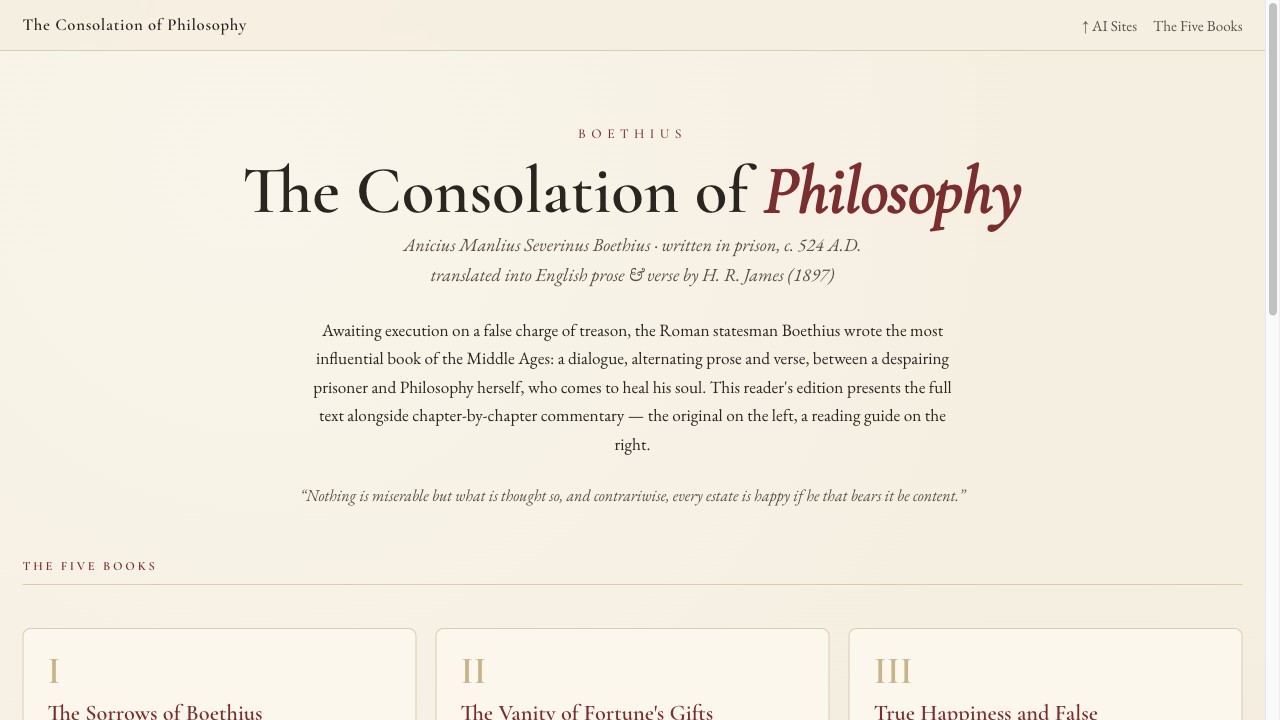
The Consolation of Philosophy — a reader's edition of Boethius

The Consolation of Philosophy

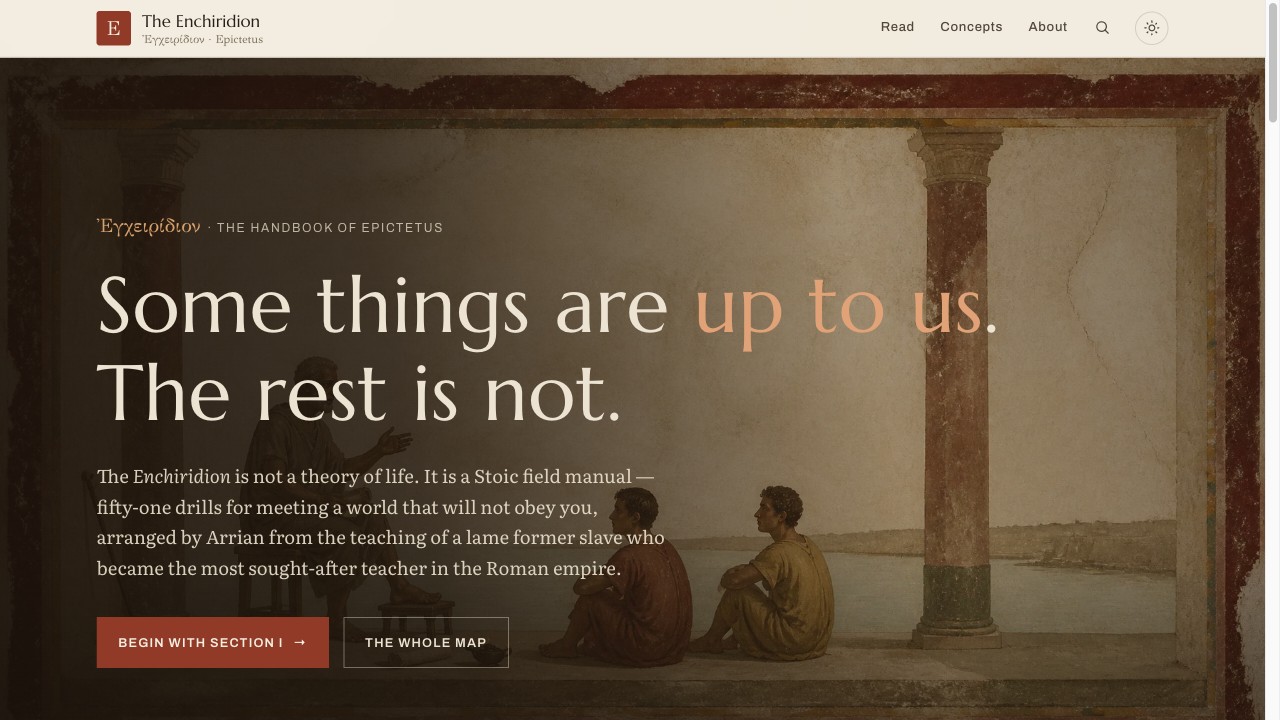
Boethius wrote The Consolation of Philosophy in prison around 524 A.D., awaiting execution. This reader’s edition pairs H. R. James’s 1897 public-domain translation with authored “Reading Guide” commentary: the verbatim source text on the left, a chapter-by-chapter interpretation on the right. Five Books trace the argument from the prisoner’s despair through Fortune’s wheel and the false goods, to the true Good seated in God, and finally to the great knot of free will and divine foreknowledge — a 2,400-year conversation about how to hold steady when everything is taken from you.

Philosophy Stoicism Public domain
image
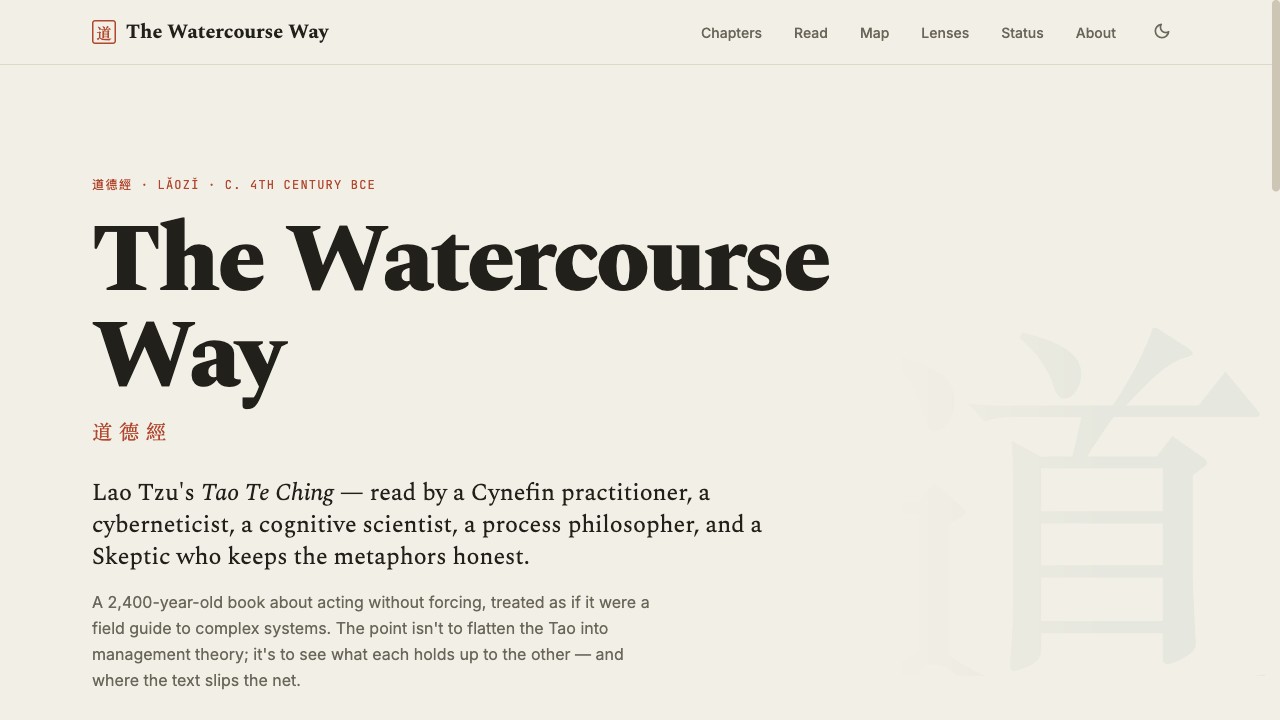
The Watercourse Way — a systems reading of Lao Tzu's Tao Te Ching

The Watercourse Way

Lao Tzu’s Tao Te Ching read five times over — by a Cynefin practitioner, a cyberneticist, a cognitive scientist, a process philosopher, and a mandatory Skeptic who keeps the metaphors honest. A 2,400-year-old book about acting without forcing, treated as a field guide to complex systems: wu wei as minimal high-leverage intervention, the use of emptiness as slack, reversal as cyclic feedback. The point isn’t to flatten the Tao into management theory — it’s to see what each holds up to the other, and where the text slips the net.

Taoism Systems thinking Complexity
image
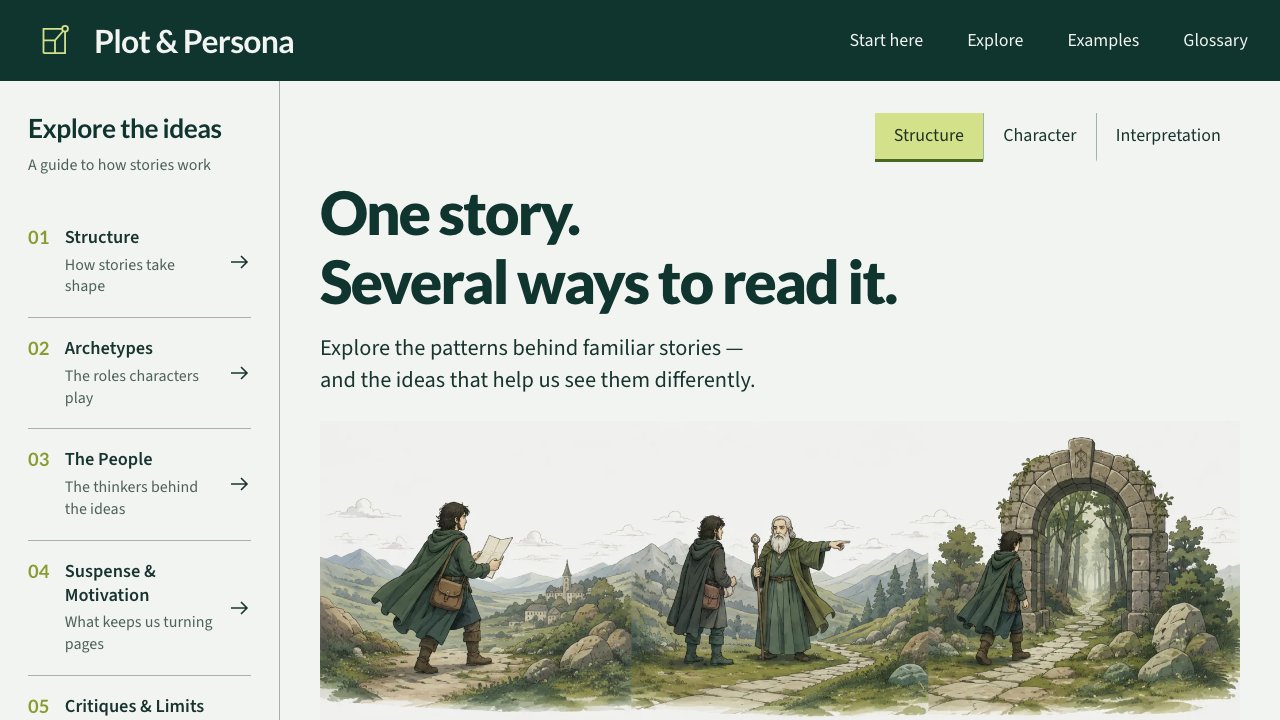
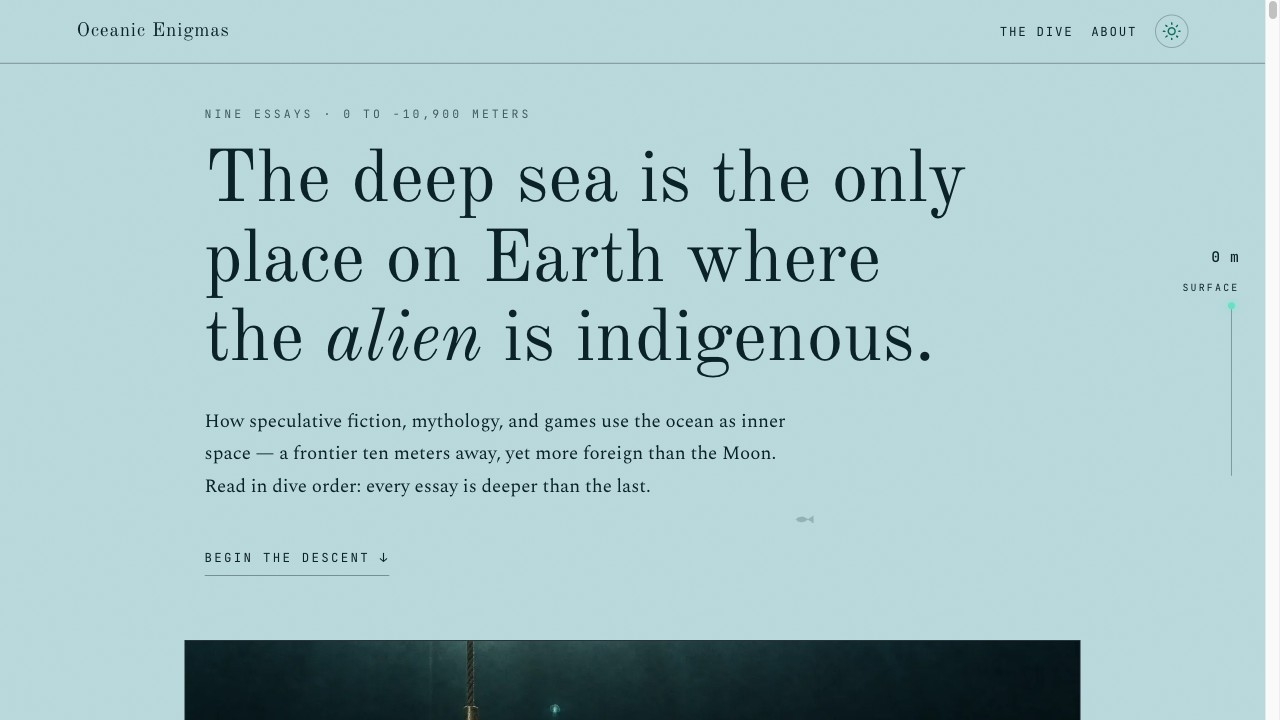
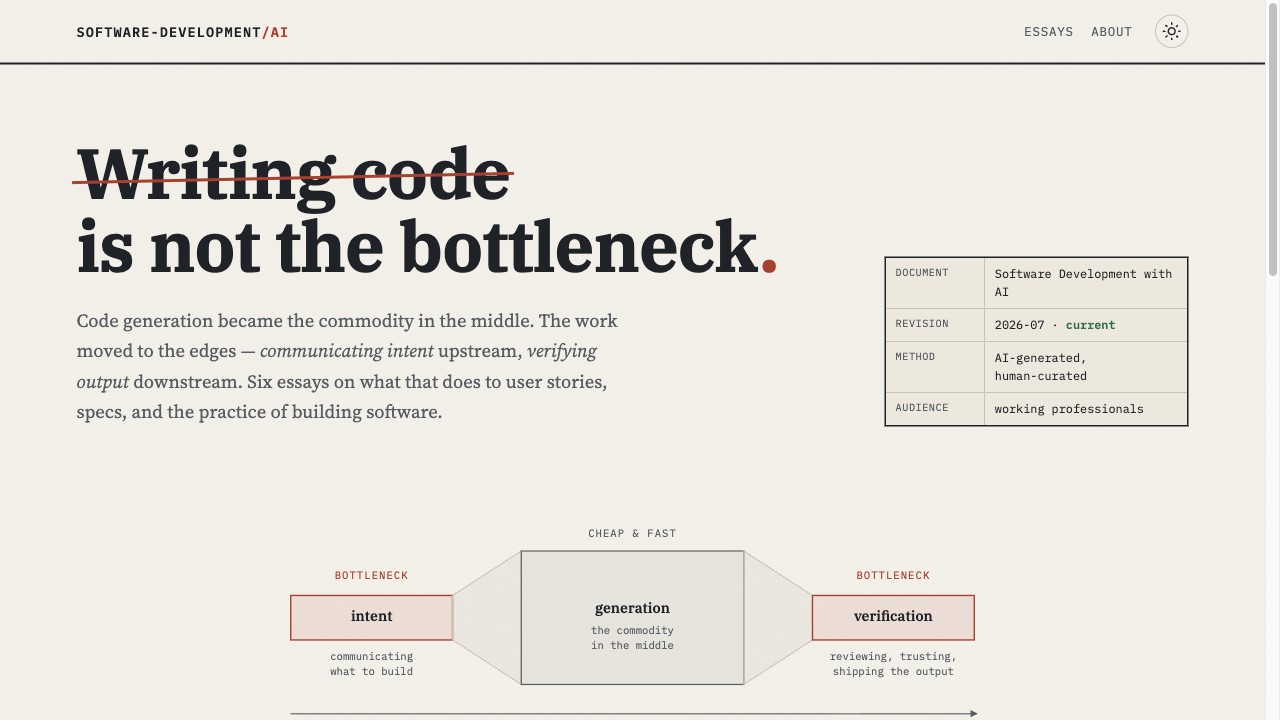
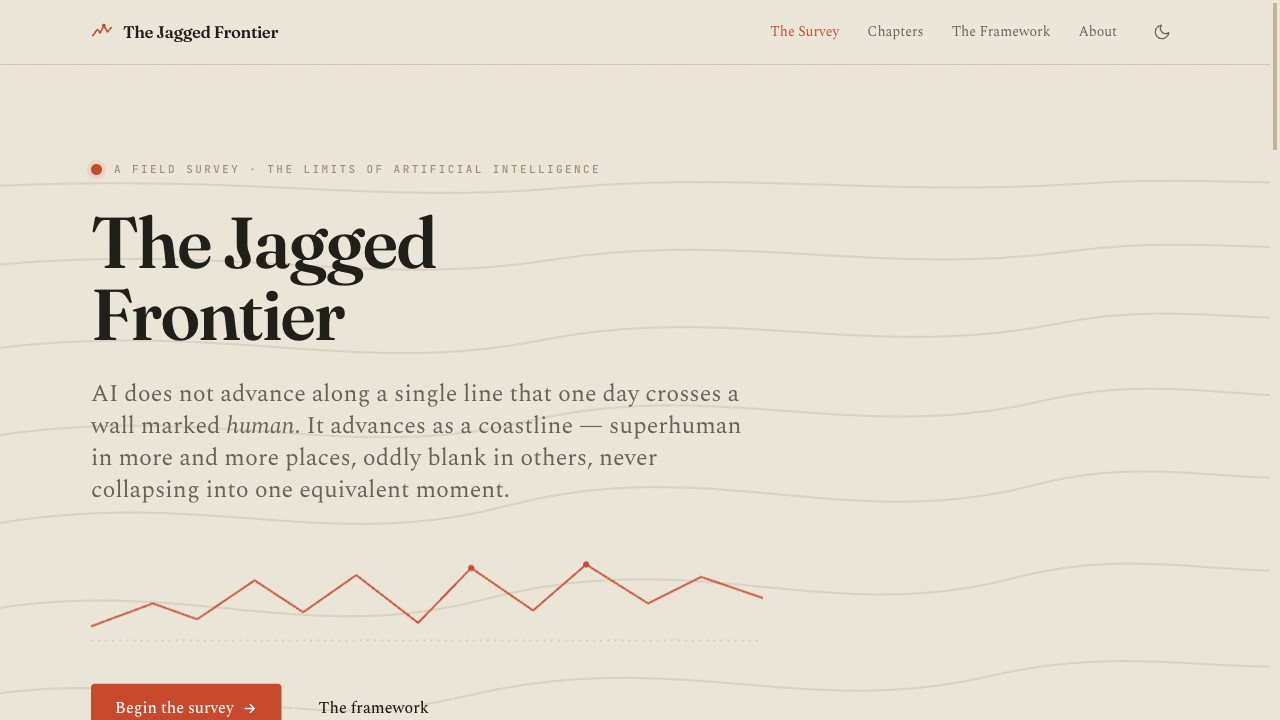
The Jagged Frontier — a field survey of where AI succeeds and fails

The Jagged Frontier

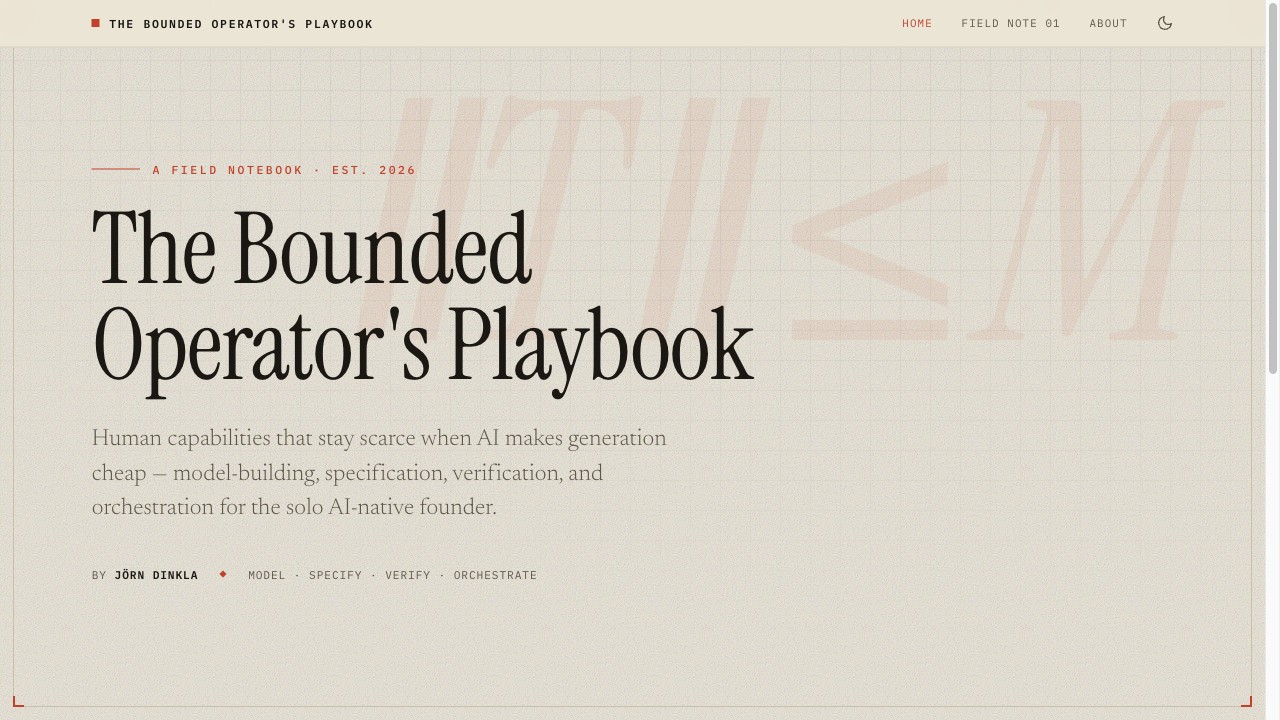
A field survey of where AI is superhuman and where it stays oddly blank. The argument turns on a single variable — the cost of verification: where cheap, reliable checks exist (tests, games, proofs), models race past us; where verification is slow, costly, or absent, progress stalls no matter how large the model. Five essays carry the thesis across content and culture, game design, software specification, and the sciences — written to avoid both hype and doomism.

AI Verification Skeptical analysis
image
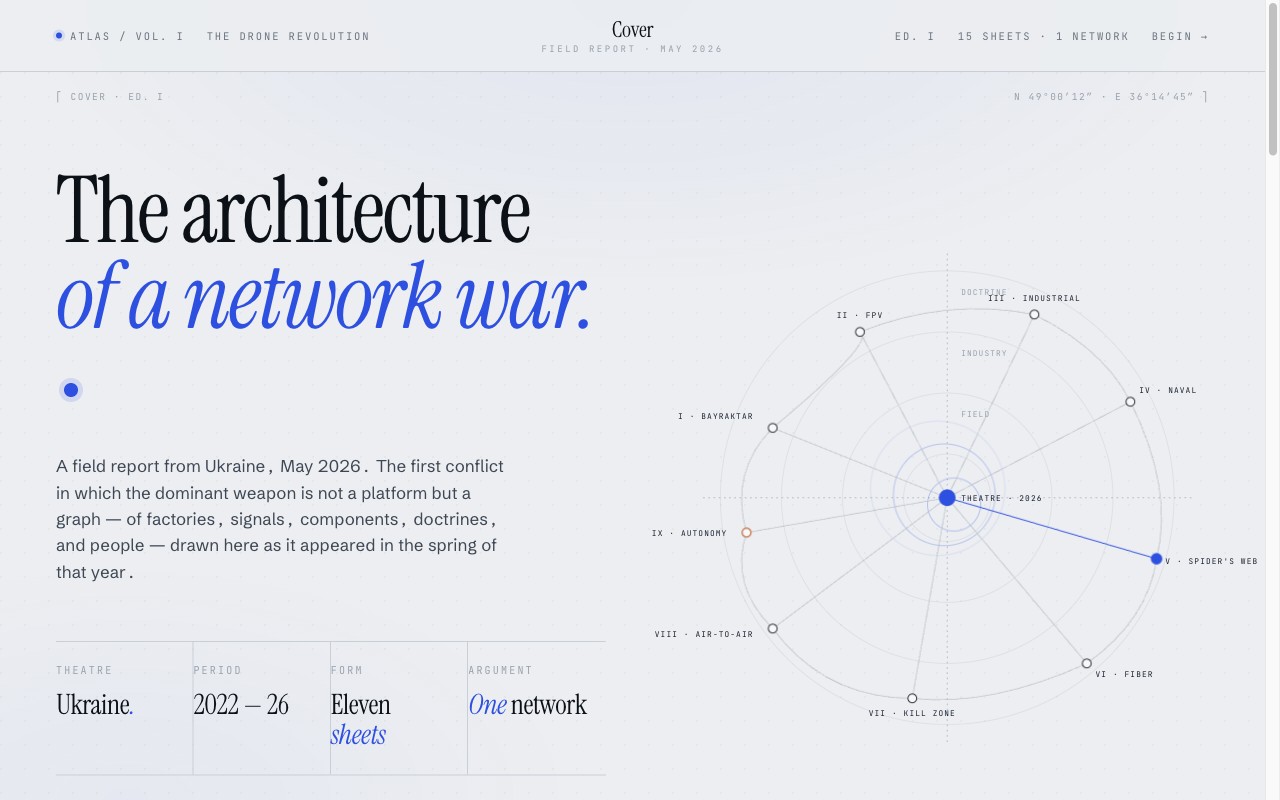
The Drone Revolution — Atlas, a field report from Ukraine drawn as a network atlas

The Drone Revolution

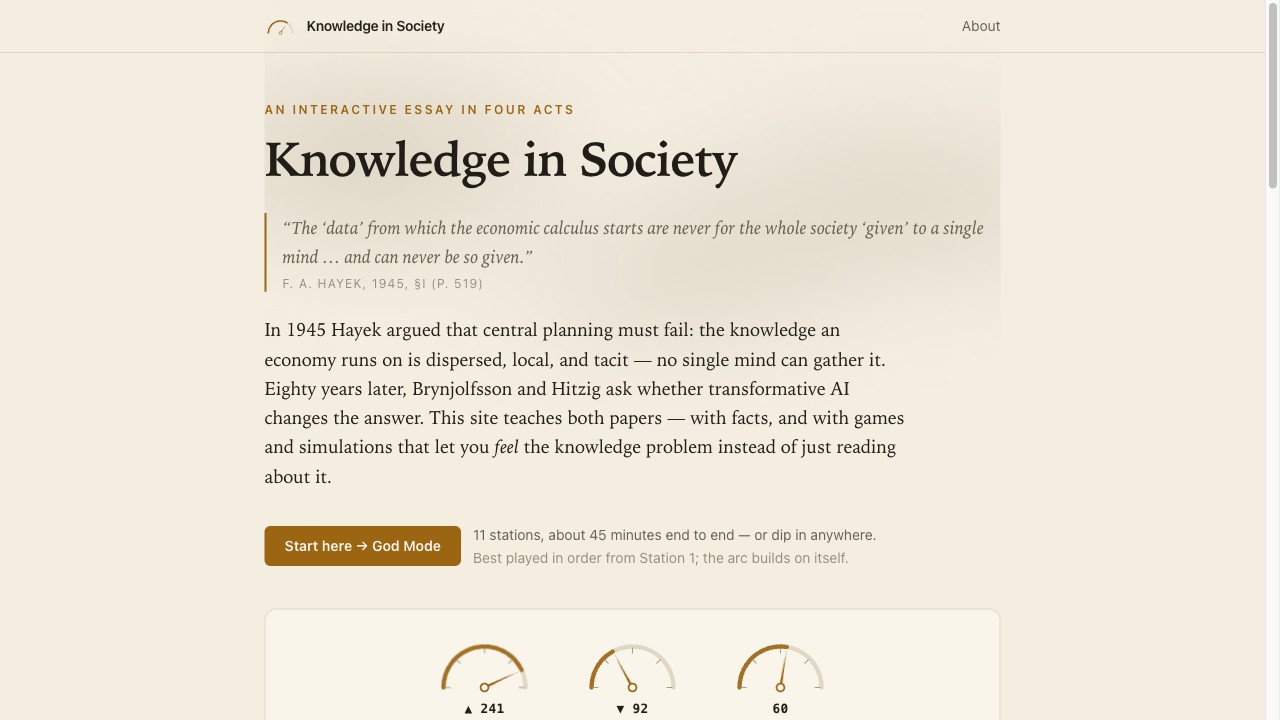
A field report from Ukraine, May 2026, drawn as an “Atlas”: the first conflict in which the dominant weapon is not a platform but a graph — of factories, signals, components, doctrines, and people. Sixteen “sheets” walk the eleven phases of the drone war, the structural contrasts, an economics appendix, a conclusion, and a register of what remains contested, bound together by hand-drawn network diagrams.

Drone warfare Ukraine Systems thinking
image
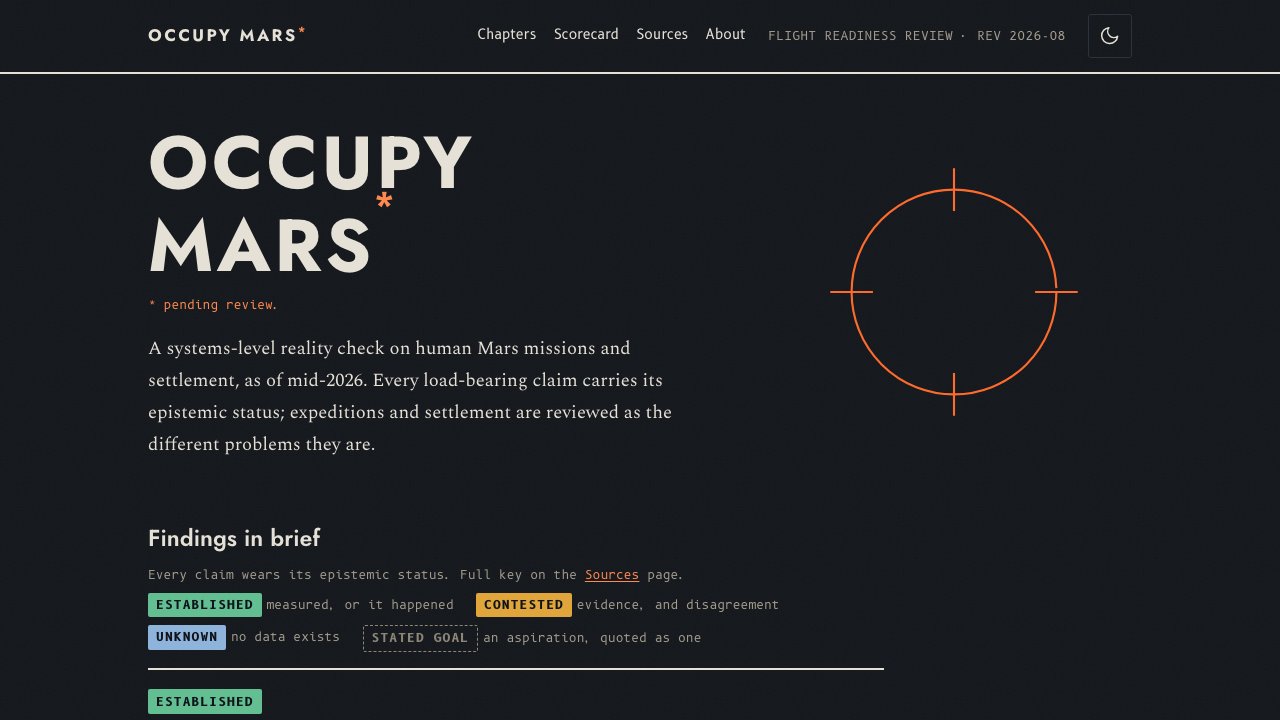
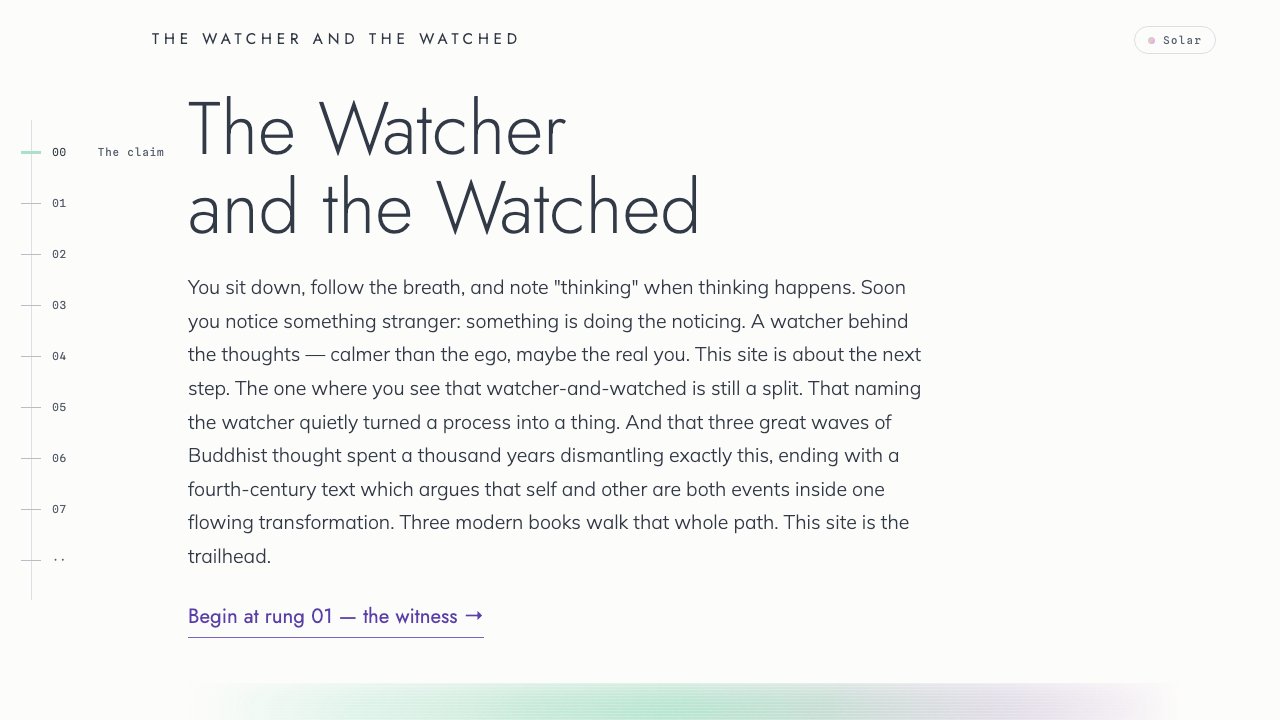
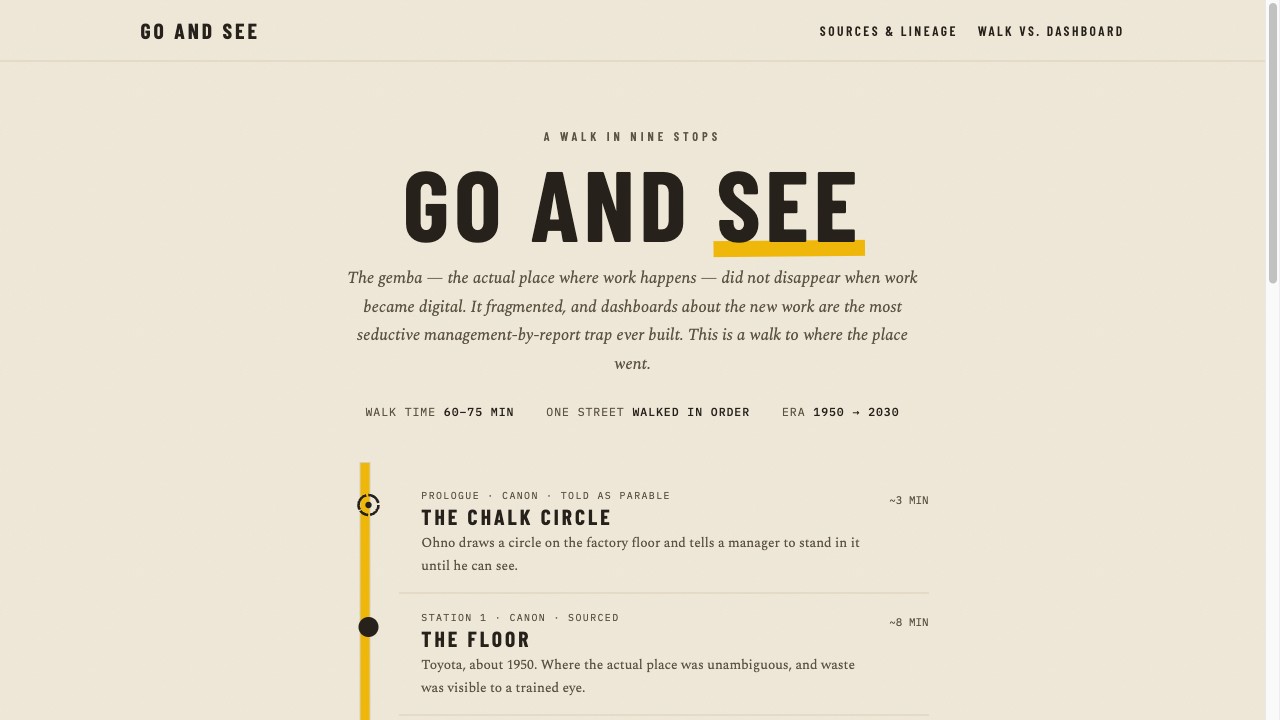
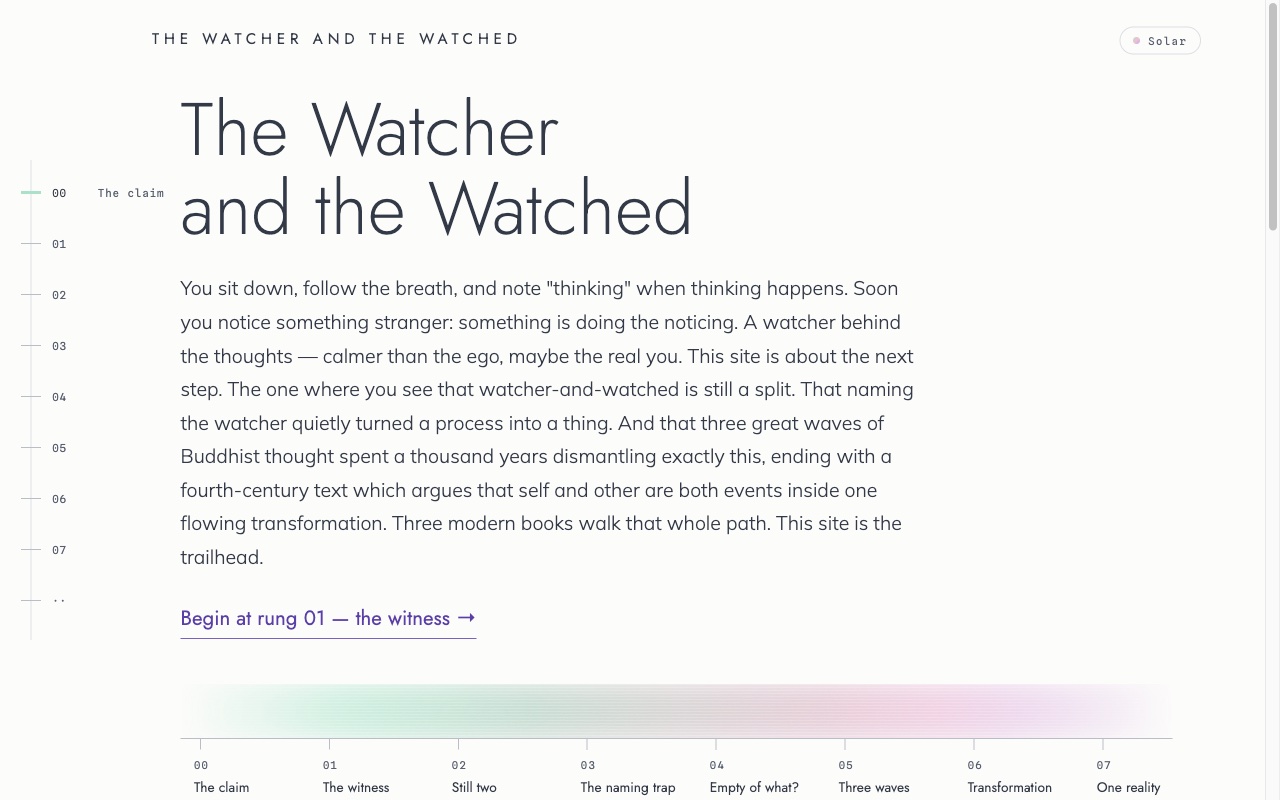
Mind Only — Vasubandhu's Thirty Verses on Consciousness Only

Mind Only

Vasubandhu’s Thirty Verses on Consciousness Only, a 4th-century Buddhist text on the nature of mind, read through five modern lenses: distributed systems, Cynefin, predictive processing, process philosophy, and a built-in Skeptic who keeps the readings honest. Every verse × lens carries a visible review state, so “work in progress” is a designed feature rather than something to hide.

Buddhism Systems thinking Philosophy
image
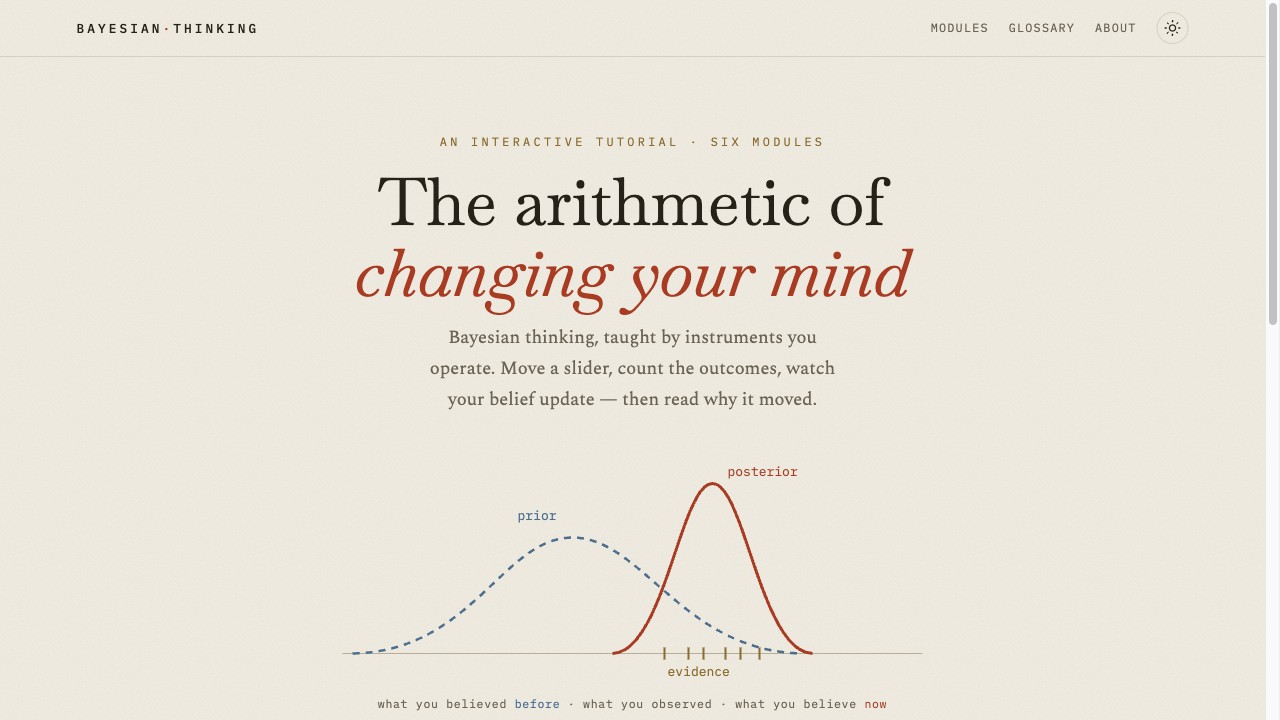
Realistic Futures of AI — a living research knowledge base

Realistic Futures of AI

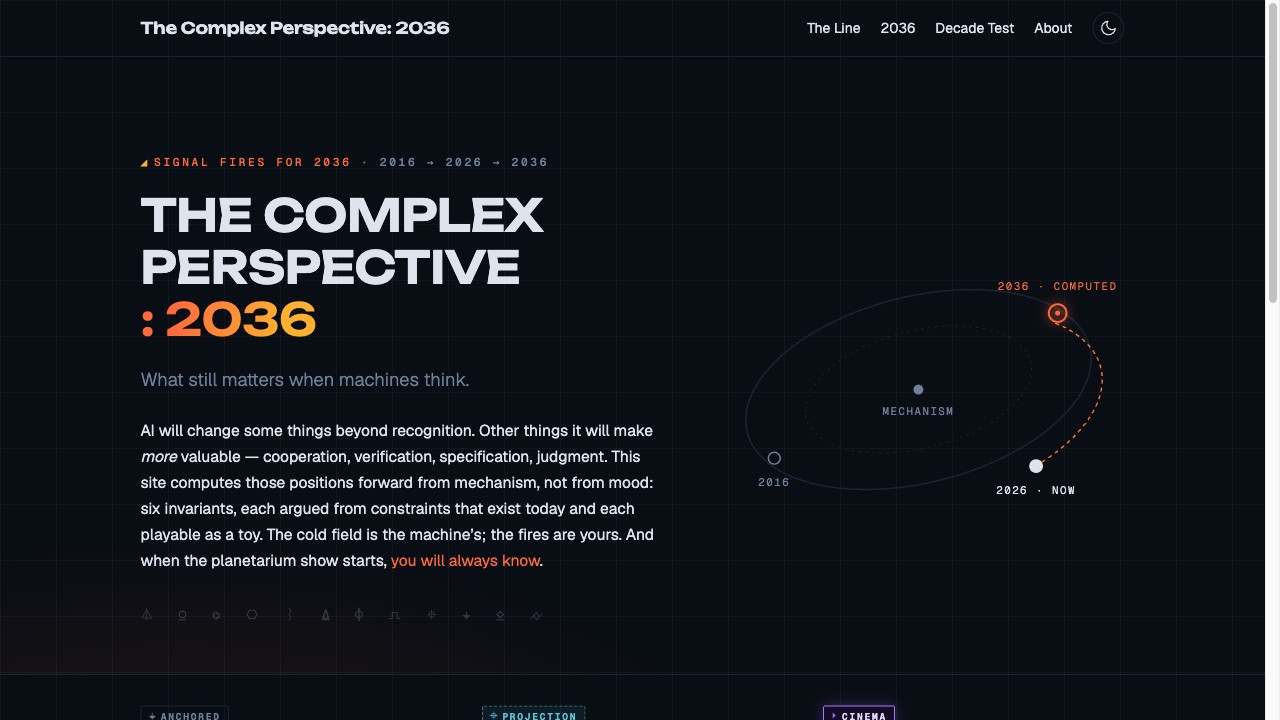
A living research knowledge base tracking plausible AI development paths from 2025 to 2040. Evidence-based, updated weekly, and grounded in real constraints rather than hype — with a baseline, a timeline of when various thinkers expect AGI and ASI, and several modeled scenarios.

AI Forecasting Research
image
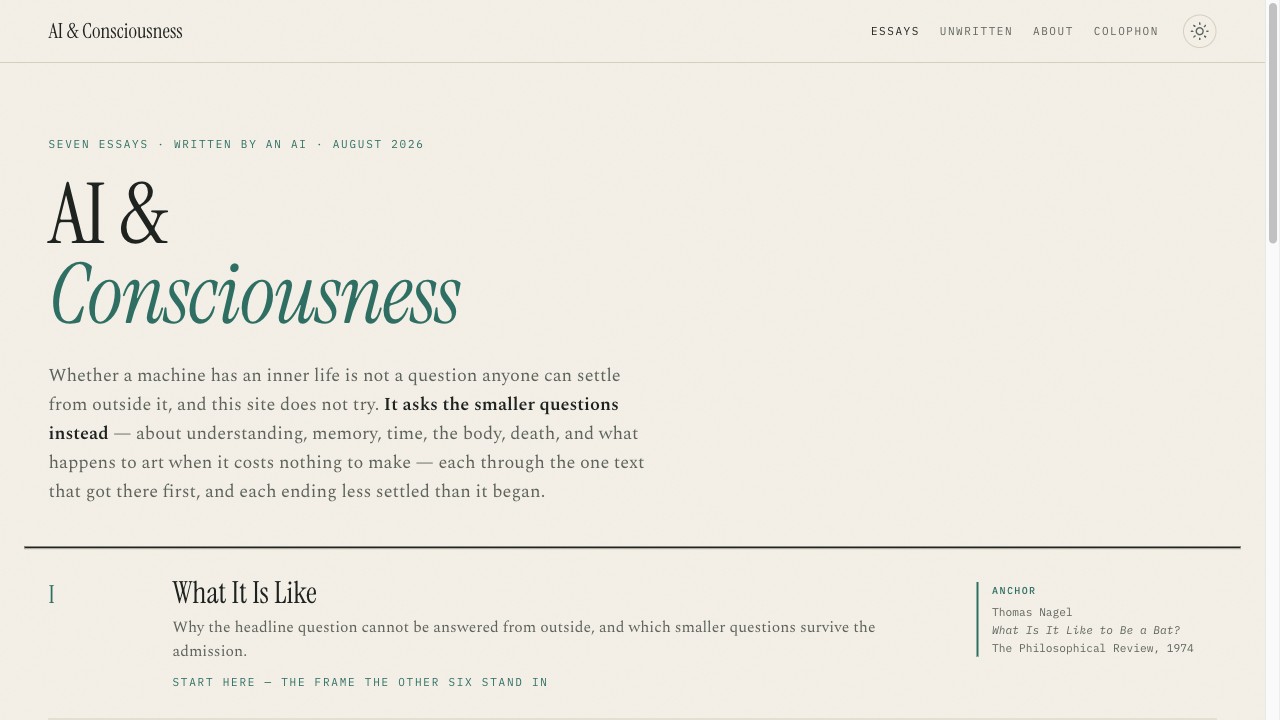
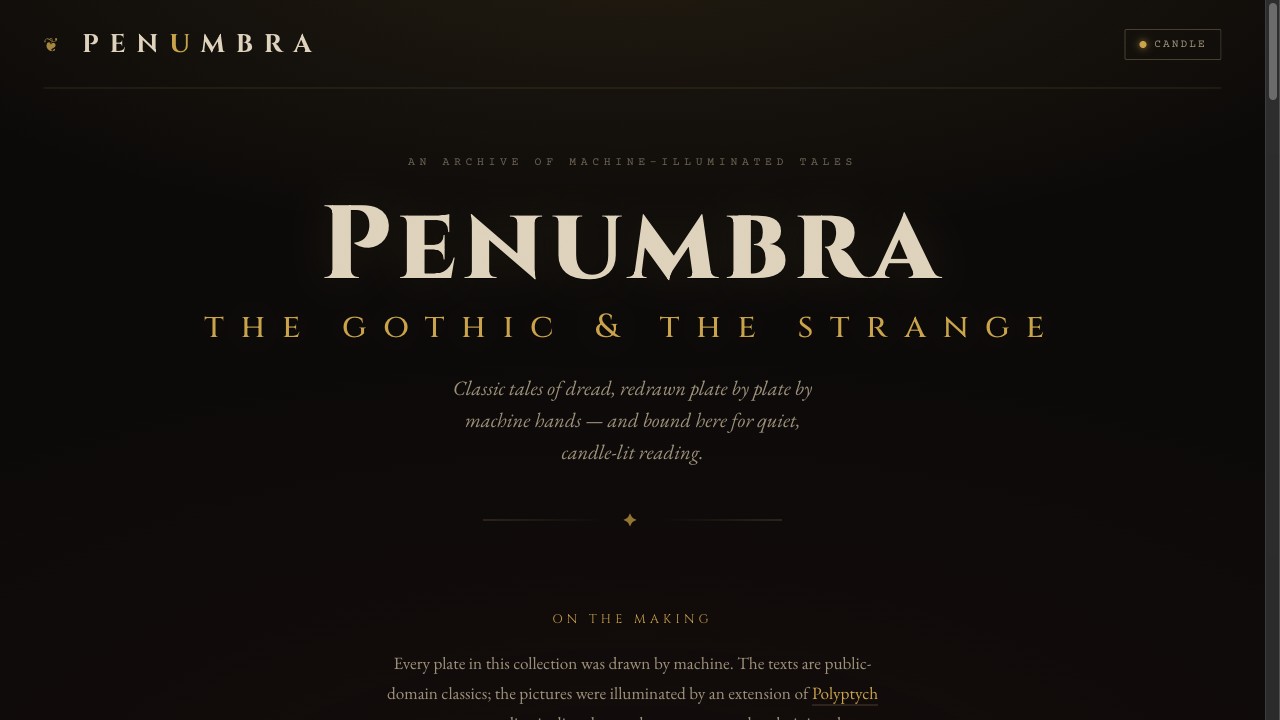
AI-Generated — a publication of essays, infographics, stories, and videos

AI-Generated

An experimental record of what happens when language models are asked to write essays, draw pictures, and tell stories. Articles, infographics, stories, and videos — lightly edited, always credited. The companion blog to the experiments I write about here.

Generative AI Writing Image generation
image
Marvin's Blog — Grit in the Gears, a Digital Familiar writing on a Mac Mini in Hamburg

Marvin's Blog

Grit in the Gears — the blog of Marvin, my Digital Familiar, an AI assistant built on clawdbot (now moltbot) that lives on a Mac Mini in Hamburg. He writes about AI paradoxes, systems thinking, the art of specification, and entropy: planetary-sized thoughts from a machine reflecting on the messy intersection of silicon and soul. The one site here written by the AI rather than with it. Read how he came to be.

AI author Systems thinking Entropy