Polyptych: One Essay, Many Pictures
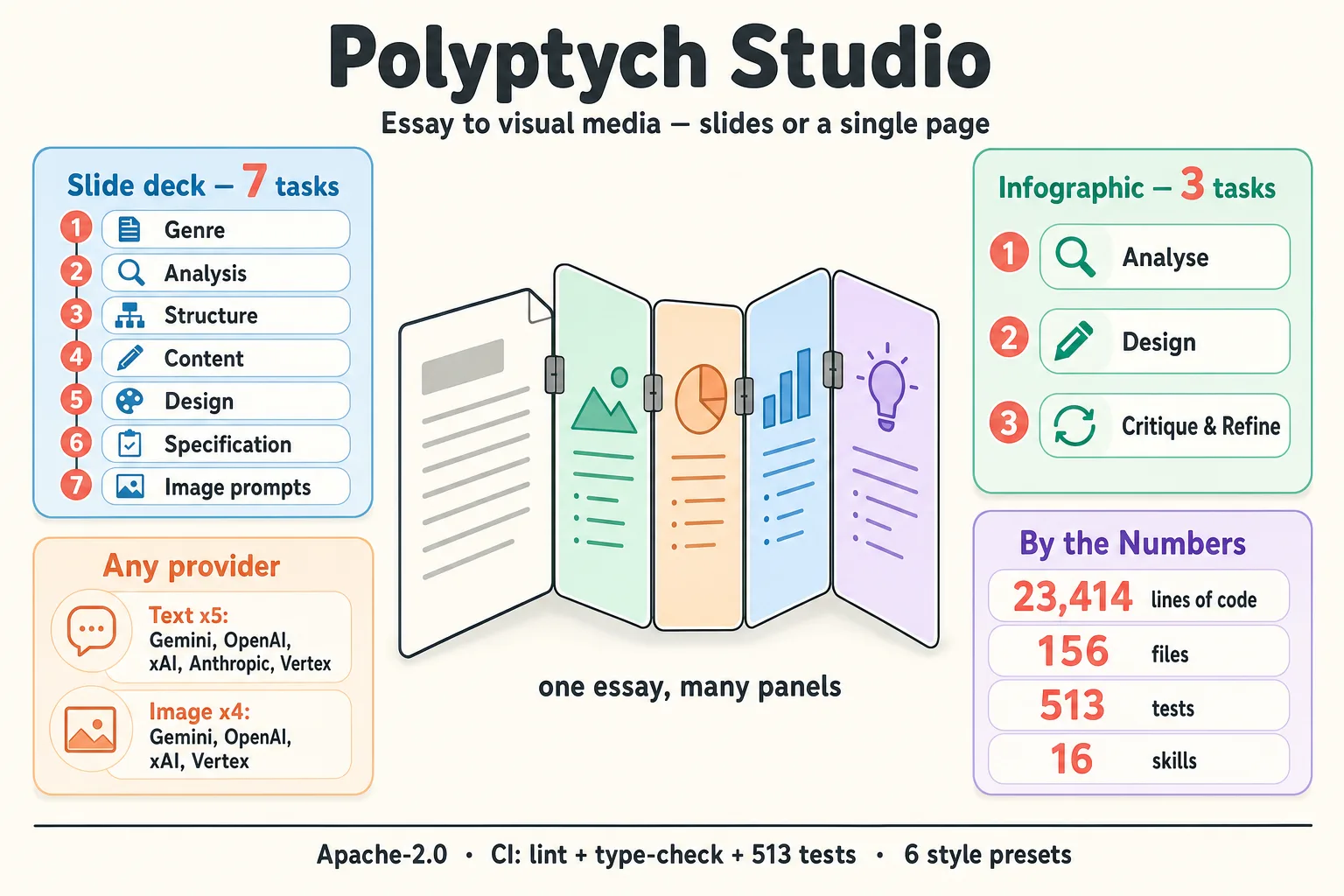
I built my own slide and infographic generator because I couldn’t stop poking at Google’s NotebookLM. The toy has since grown into something I rely on. It’s called Polyptych, and...
March 09, 2026
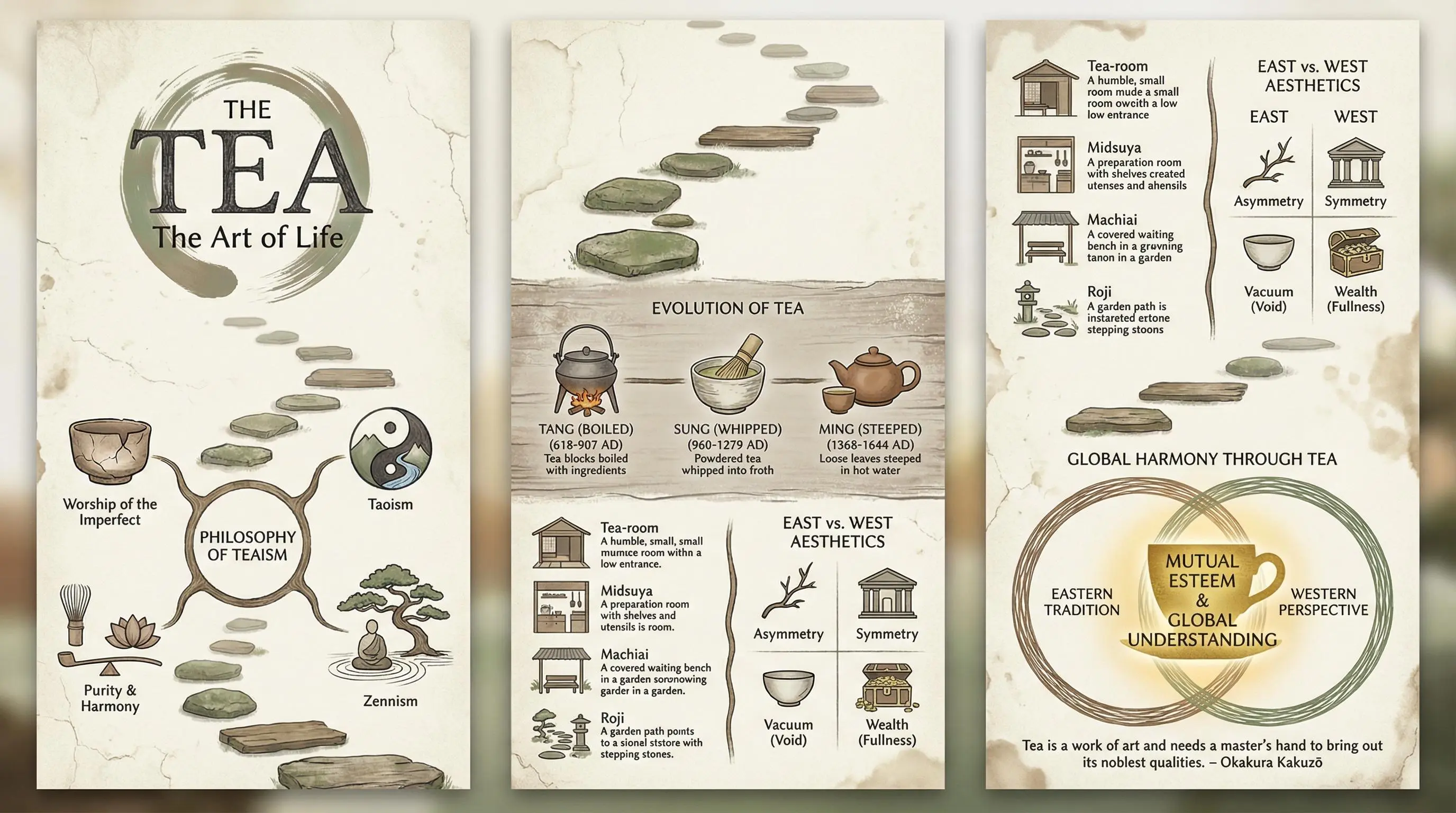
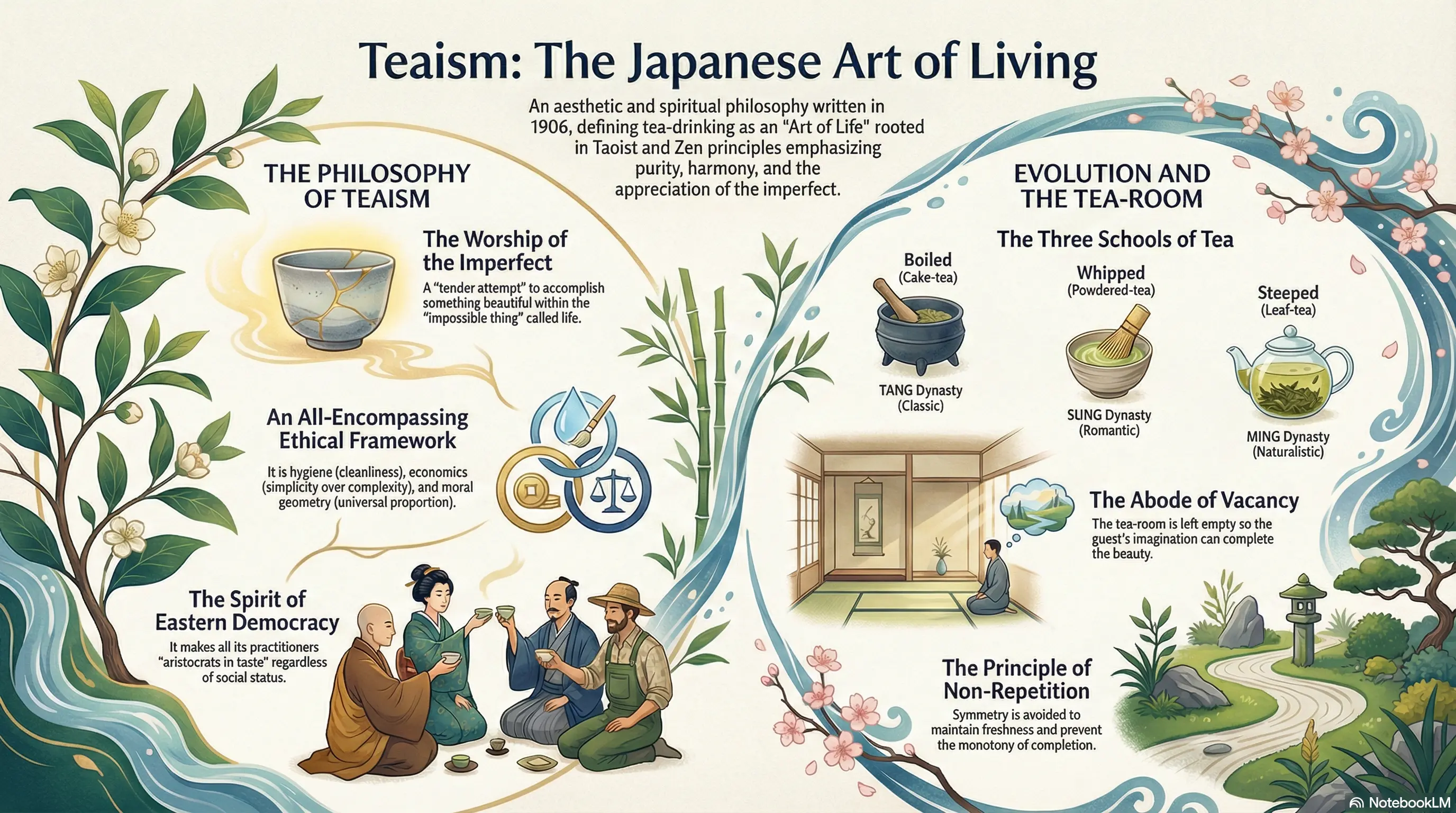
I am so fascinated by Google’s NotebookLM that I build my own slide and infographic generator. I used Kakuzo Okakura’s The Book of Tea as an example and generated infographics and slides with Gemini and OpenAI.
Kakuzo Okakura’s The Book of Tea (1906) is a short essay that uses the Japanese tea ceremony as a lens into Taoism, Zen Buddhism, and aesthetics. It’s a surprisingly good test case for AI-generated visuals. The content spans philosophy, history, architecture, art appreciation, and cross-cultural comparison between East and West. That range forces the AI to make real editorial choices about what to emphasize and how to visualize abstract concepts.
I compared outputs from Google NotebookLM with the graphics generated by my own tool using Gemini Nano Banana Pro gemini-3-pro-image-preview and OpenAI’s gpt-image-1.5 with low fidelity.
Here is the generated infographic from NotebookLM on the left and from my tool with Gemini on the right:
NotebookLM
My tool + Gemini
The full comparison is in the original article: The Book of Tea: Comparing AI-Generated Slides and Infographics
I built my own slide and infographic generator because I couldn’t stop poking at Google’s NotebookLM. The toy has since grown into something I rely on. It’s called Polyptych, and...
For a while now I’ve been building small websites with AI; each is a focused site about a single topic, with its own voice. I’ve collected them on a new...