In the novel “The Phoenix Project: A Novel About IT, DevOps, and Helping Your Business Win”, the protagonist Bill is promoted against his will and must immediately take over, be responsible for, and maintain IT operations within his company. In doing so, he naturally encounters a whole host of problems.
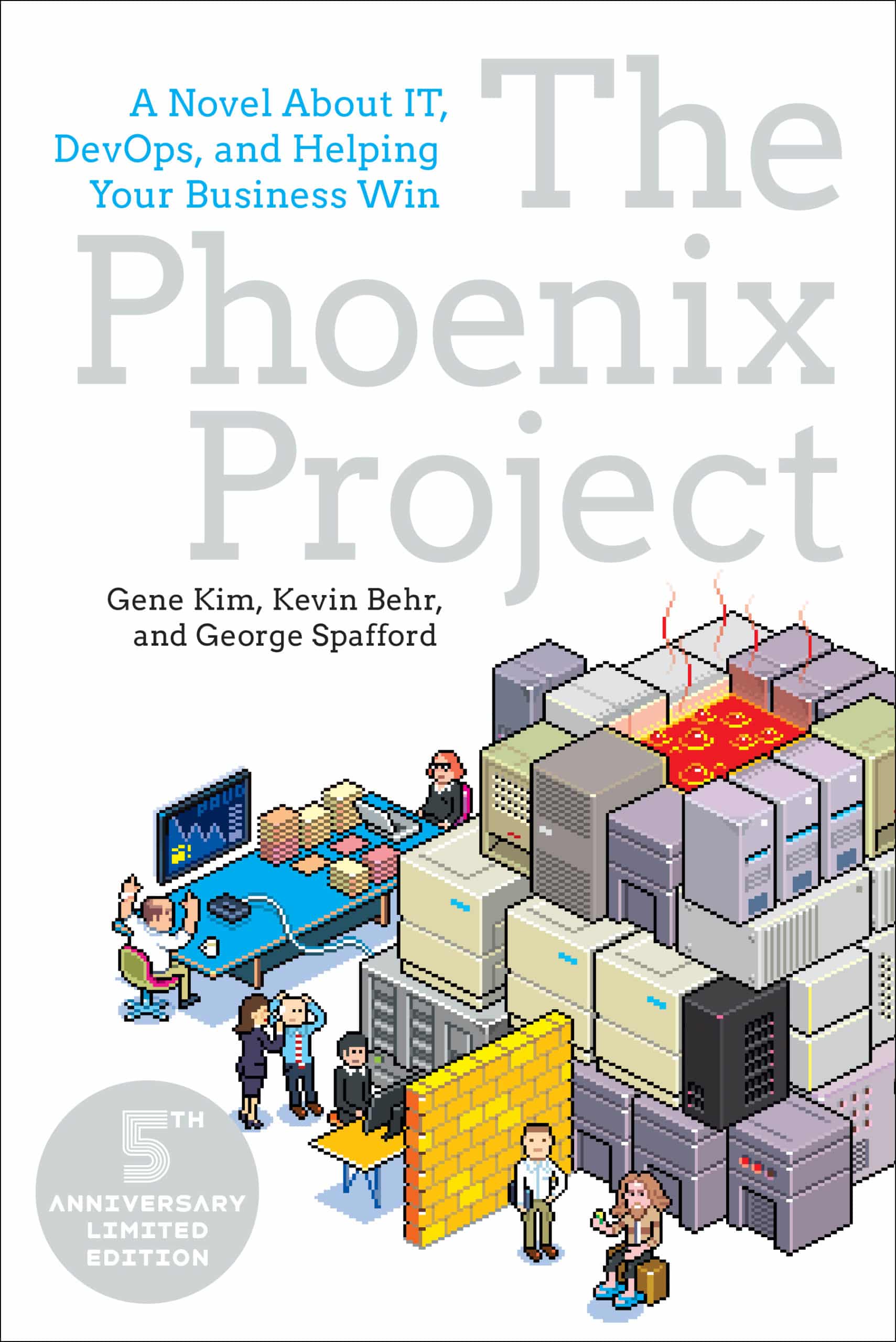
The existing processes take a very long time, certain people are chronically overworked, the marketing department has its own ideas about how IT operations should be organized, a new product is about to be launched, etc. In the course of the novel, it becomes clear to Bill (and thus also to the reader) that the traditional view of corporate IT is very harmful to the company itself. Step by step, the book applies the “Theory of Constraints” (ToC) by Eliyahu M. Goldratt—which was developed in the 1980s for traditional “physical” factories—to the “digital” factories of software development (Dev) and software operations (Ops). Bill slowly understands how to organize IT correctly and ultimately saves the company.
As an introduction to the problem and the ToC, this book is the go-to choice today. Of course, it can also be supplemented with the original “The Goal” by Eliyahu M. Goldratt.
- Gene Kim, Kevin Behr, George Spafford
- The Phoenix Project: A Novel About IT, DevOps, and Helping Your Business Win
- IT Revolution Press
- 2014
See also the review (in german) on Amazon.