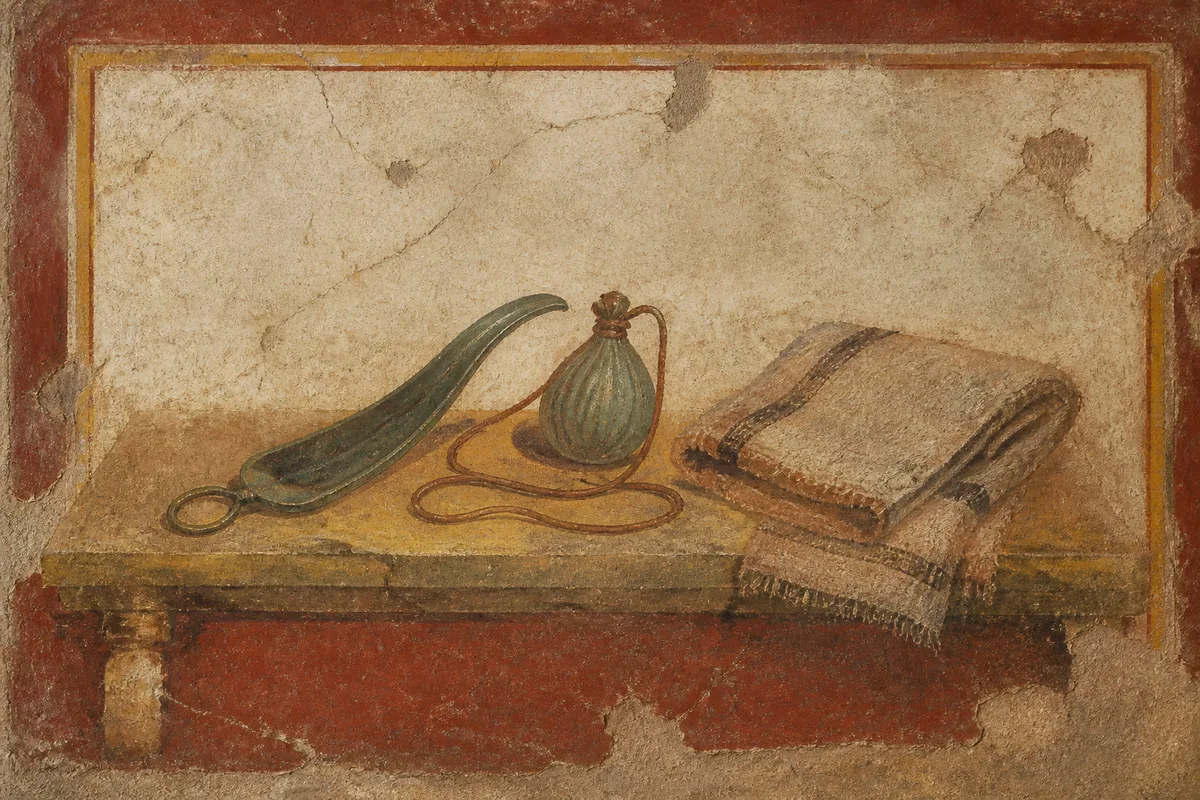
The body is to everyone the proper measure of its possessions, as the foot is of the shoe. If, therefore, you stop at this, you will keep the measure; but if you move beyond it, you must necessarily be carried forward, as down a precipice; as in the case of a shoe, if you go beyond its fitness to the foot, it comes first to be gilded, then purple, and then studded with jewels. For to that which once exceeds the fit measure there is no bound.
Part V of VI · Sections 39–45
A Steadier Mind
ἄσκησις askēsis — “training”
The measure of the body, the two handles, verdicts confined to what you actually saw — habits that keep judgment level.
Women from fourteen years old are flattered by men with the title of mistresses. Therefore, perceiving that they are regarded only as qualified to give men pleasure, they begin to adorn themselves, and in that to place all their hopes. It is worth while, therefore, to try that they may perceive themselves honored only so far as they appear beautiful in their demeanor and modestly virtuous.
It is a mark of want of intellect to spend much time in things relating to the body, as to be immoderate in exercises, in eating and drinking, and in the discharge of other animal functions. These things should be done incidentally and our main strength be applied to our reason.
When any person does ill by you, or speaks ill of you, remember that he acts or speaks from an impressionφαντασίαphantasiaImpressionHow a thing appears before you have judged it. The whole discipline begins by pausing here: ‘You are but a semblance, and by no means the real thing.’ that it is right for him to do so. Now it is not possible that he should follow what appears right to you, but only what appears so to himself. Therefore, if he judges from false appearances, he is the person hurt, since he, too, is the person deceived. For if anyone takes a true proposition to be false, the proposition is not hurt, but only the man is deceived. Setting out, then, from these principles, you will meekly bear with a person who reviles you, for you will say upon every occasion, “It seemed so to him.”
Everything has two handles: one by which it may be borne, another by which it cannot. If your brother acts unjustly, do not lay hold on the affair by the handle of his injustice, for by that it cannot be borne, but rather by the opposite—that he is your brother, that he was brought up with you; and thus you will lay hold on it as it is to be borne.
These reasonings have no logical connection: “I am richer than you, therefore I am your superior.” “I am more eloquent than you, therefore I am your superior.” The true logical connection is rather this: “I am richer than you, therefore my possessions must exceed yours.” “I am more eloquent than you, therefore my style must surpass yours.” But you, after all, consist neither in property nor in style.
Does anyone bathe hastily? Do not say that he does it ill, but hastily. Does anyone drink much wine? Do not say that he does ill, but that he drinks a great deal. For unless you perfectly understand his motives, how should you know if he acts ill? Thus you will not risk yielding to any appearancesφαντασίαphantasiaImpressionHow a thing appears before you have judged it. The whole discipline begins by pausing here: ‘You are but a semblance, and by no means the real thing.’ but such as you fully comprehend.