Plate VI · −3,600 m · midnight zone
The Locked-Room Sea
A ship is the only locked room that can drown you. That is why the mystery genre keeps boarding one.
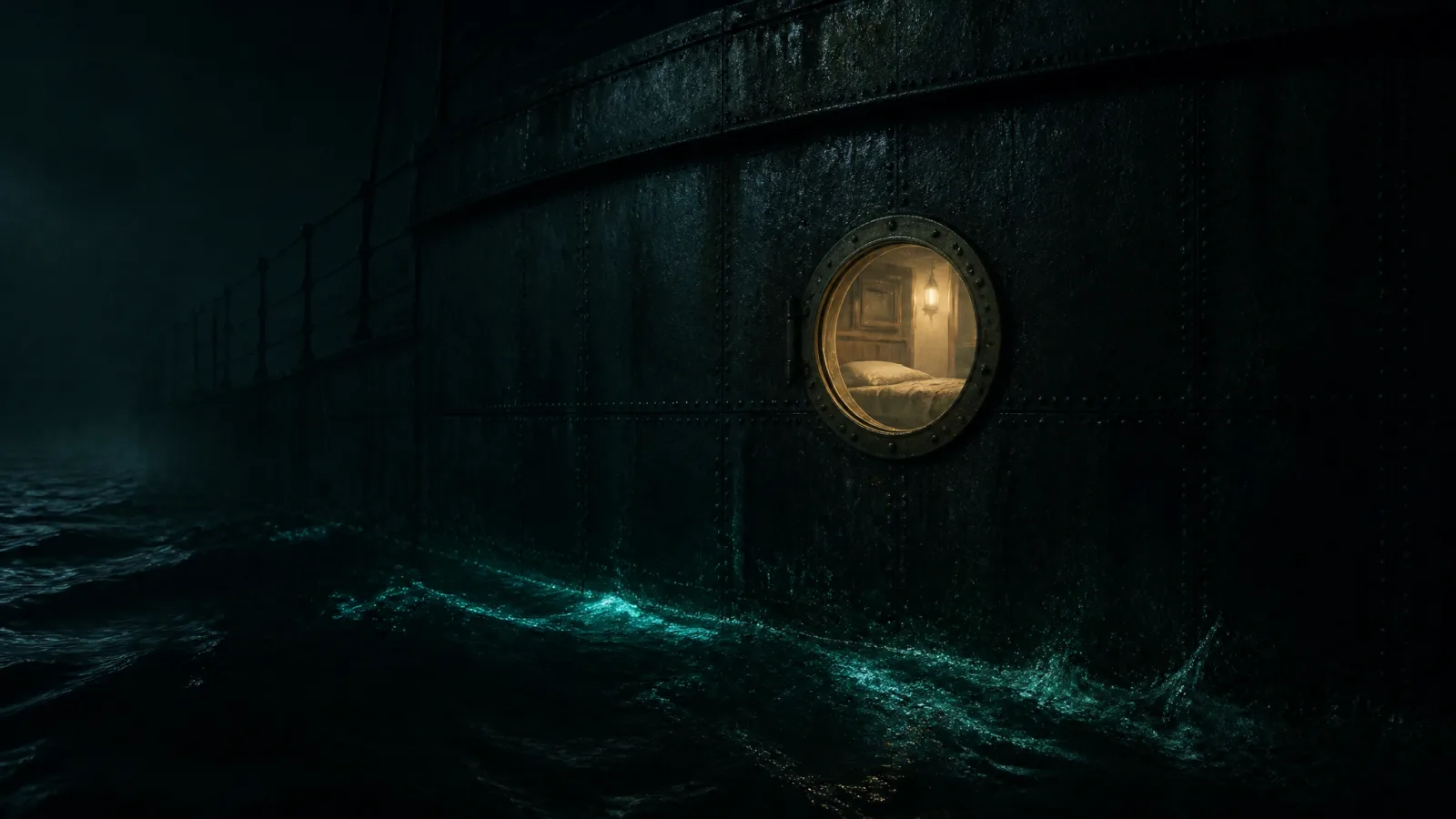
The locked-room mystery has a supply problem: modern life is full of exits. Phones work, police come, and a suspect can simply leave. A ship repairs all of it at once. Cut the shoreline and you have a bounded cast, no emergency services, no jurisdiction anyone can name quickly, and a floor that will kill you if the story’s violence damages it. Writers don’t set these books at sea out of love for boats; the sea is the last place where the form’s classical conditions still obtain honestly.
Three pressures do the work. The first is the absence of oversight: maritime law leaves passengers considerably less protected than they assume, and jurisdiction on international water is a genuine tangle rather than a plot convenience — crimes can be committed, as the genre’s critics put it, in peace. Distress Signals builds directly on that gap: a person can vanish from a cruise liner and the machinery for pursuing it barely engages. The second is total dependence: everyone’s survival is subcontracted to the hull’s integrity and the crew’s competence. Will Dean’s The Last Passenger strips this to bone — the nightmare is waking to an empty ship, all the infrastructure of staying alive still humming, unmanned.
Table VI — Maritime mysteries and their psychological drivers
| Work | Setting | Key psychological driver |
|---|---|---|
| The Woman in Cabin 10 | Luxury cruise ship | Paranoia and gaslighting among the wealthy |
| Lying in the Deep | Semester-at-sea ship | Claustrophobia and locked-room social tension |
| The Yacht (Sarah Goodwin) | Adrift party boat | Survival desperation, the collapse of trust |
| Distress Signals | Modern cruise liner | Legal grey areas and the ease of vanishing |
The third pressure is the strangest, and it is what separates the sea from a snowbound manor: claustrophobia and agoraphobia arrive together. Characters are crammed into cabins, corridors, and engine rooms — while being surrounded, in every direction including down, by a hostile void with no edge. There is nowhere to go and unlimited nowhere to go into. That double bind is why the shipboard thriller can run its tension without a monster; the geometry supplies the dread that Plate V needed a god for.
The captain, as the genre never tires of saying, is everything, and boarding is an act of faith. What the locked-room sea does — from The Woman in Cabin 10’s dismissed witness to the adrift party boat of The Yacht — is withdraw that faith one plank at a time and film what is left of the social order. The answer is usually: less than we would like. The next essay keeps the sealed hull and the failing faith, then removes the last comfort these books still allow. It puts the room on the seafloor.