Shapeshifter
The shapeshifter makes allegiance or identity uncertain. The change may be in the character, or in what the protagonist understands about them.
Uncertainty with a human source
Vogler’s shapeshifter function introduces doubt into a relationship. Someone appears helpful and then obstructive, intimate and then distant, sincere and then deceptive. Literal transformation is optional. A character can remain consistent while new information changes the protagonist’s reading of them.
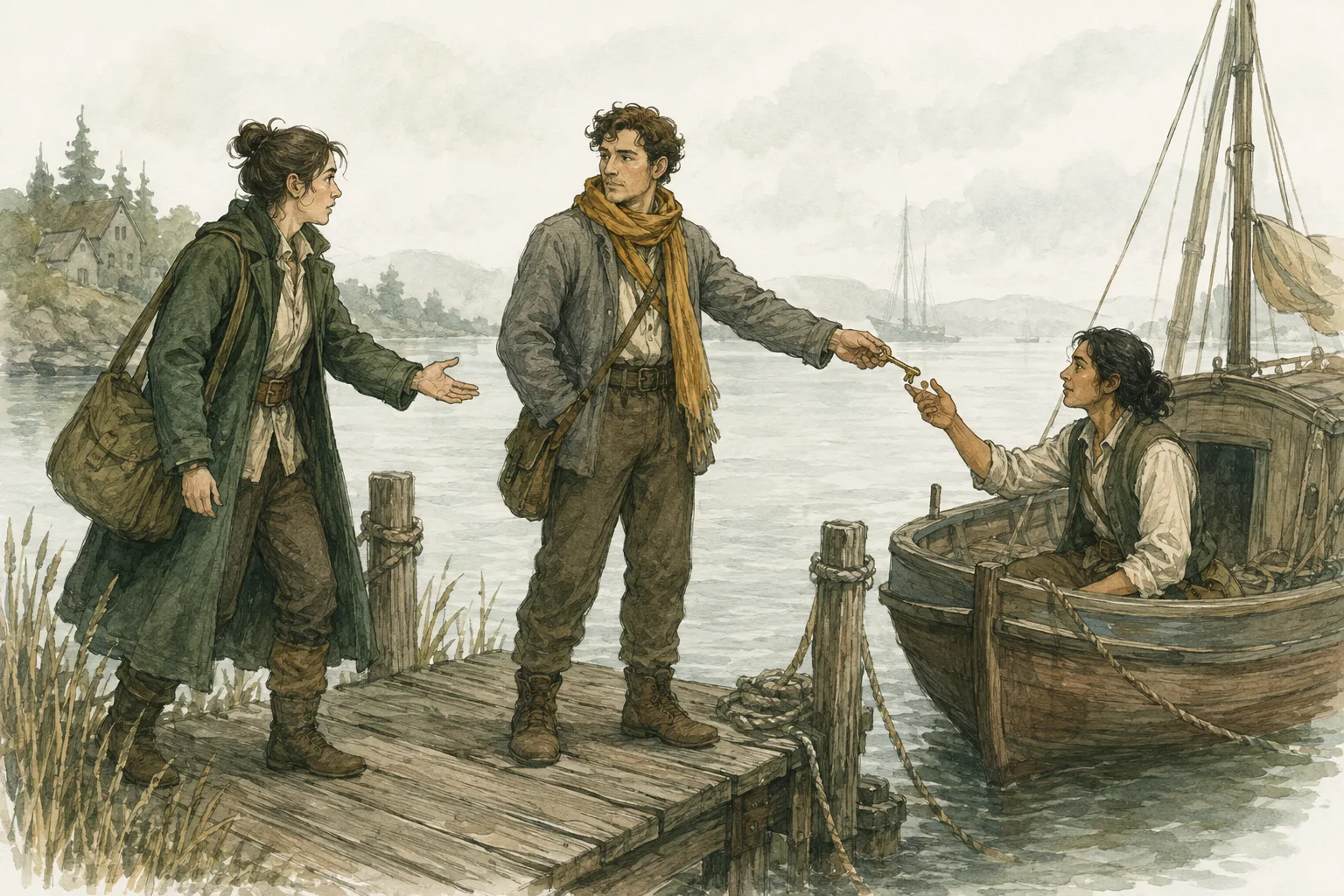
That distinction matters. A surprise revelation may expose a stable motive that was previously hidden; it need not mean the person has changed personality. Conversely, a character may genuinely revise an allegiance. Good analysis separates a change in behavior, a change in motive and a change in the audience’s knowledge.
Suspense depends on a pattern
Uncertainty becomes engaging when the audience can form and revise expectations. A person who changes sides arbitrarily gives us little to interpret. Small contradictions, selective disclosures and competing commitments offer evidence without resolving it too soon. The reader can ask what the character is protecting, concealing or trying to obtain.
The protagonist’s desire can also distort judgment. Someone may mistake charm for reliability, interpret caution as rejection, or ignore a warning because they need a relationship to work. The shapeshifter function then reveals the observer’s limitations as well as the observed person’s ambiguity.
Three different kinds of ambiguity
Han Solo in A New Hope (1977) acts from a visible interest in payment and survival. Luke hopes for a deeper commitment before Han is ready to make one. Han’s departure and later return matter because the conflict between self-interest and attachment has been established. He is not literally changing shape, and the label describes a relation to Luke’s expectations.
Gollum in Tolkien’s The Lord of the Rings combines guidance, dependency, resentment and a consuming desire for the Ring. His unstable relation to Frodo is not merely a puzzle to solve. It raises questions about mercy, trust and the limits of intention. Reducing him to “unreliable ally” loses the force of that moral and psychological conflict.
Severus Snape across the Harry Potter novels is read differently as information about his commitments emerges. Chapter 33 of Harry Potter and the Deathly Hallows (2007), “The Prince’s Tale,” supplies a major late disclosure. The audience’s uncertainty extends over a series, not a single scene. A careful discussion distinguishes the books from their film adaptations and avoids treating a later revelation as proof that earlier cruelty did not matter.
Question the inherited gender assumptions
Vogler connects this role to Jungian anima and animus language, historically framed through binary ideas about gender and the unknown other. That framework belongs to the model’s intellectual history. It is not a rule that women are mysterious obstacles for male heroes or that a romantic partner must embody someone’s unconscious opposite.
The function can be examined without preserving those stereotypes. Ask what makes another person difficult to know: unequal information, conflicting responsibilities, projection, deliberate concealment or a real change of mind. These are specific relational conditions available to characters of any gender.
Let ambiguity have consequences
If a suspected betrayal never affects a decision, the uncertainty may remain decorative. Trust becomes dramatic when it determines access, cooperation or risk. A protagonist can choose to rely on someone despite uncertainty; that choice is different from failing to notice obvious evidence.
A revelation should also change more than the audience’s label for a character. It can alter obligations, make an earlier sacrifice newly meaningful, or expose damage that cannot be repaired. Reversing a moral verdict without addressing the person’s actions may create a surprise while weakening the story’s ethical coherence.
The common pitfall is endless reversal. When every scene cancels the one before it, viewers may stop investing in any interpretation. Preserve enough continuity that a later disclosure makes earlier details more intelligible. If genuine instability is the point, show its conditions and costs rather than treating it as an inexhaustible source of twists.
Diagnostic question: what remains consistent beneath the apparent changes, and whose mistaken expectation does the next revelation expose?
Sources & further reading
Source notes identify the model or work discussed. Story mappings and diagnostic questions are this site’s interpretations.
- Christopher Vogler — The Writer’s Journey: Mythic Structure for Writers. 25th Anniversary Edition, Michael Wiese Productions, 2020. Author’s account of the memo, book and flexible use of the model; stage and archetype discussions refer to the book.
- C. G. Jung — The Archetypes and the Collective Unconscious. Collected Works 9, part 1; second edition, translated by R. F. C. Hull, 1969. A historical psychological theory, distinguished here from dramatic roles.
- George Lucas, writer and director — Star Wars: Episode IV—A New Hope. Lucasfilm, 1977; originally released as Star Wars. Official film record. Our mapping concerns this film alone and is interpretive.
- J. R. R. Tolkien — The Hobbit; The Lord of the Rings. The Hobbit, 1937, revised second edition 1951; The Lord of the Rings, 1954–1955. The Estate’s works directory. The examples refer to the books, not the Jackson films.
- J. K. Rowling — Harry Potter novels; Harry Potter and the Deathly Hallows. Series published 1997–2007; Deathly Hallows (2007), Chapter 33, “The Prince’s Tale”. Official franchise commentary identifies the late revelation about Snape. The example concerns the novels; this link is commentary, not the complete primary text.