Shadow
The shadow concentrates opposition or disowned possibility. A villain may carry it, but the role is not a synonym for evil.
Opposition makes a value visible
Vogler’s shadow function gives the hero something consequential to confront. It may appear as an antagonist whose aim conflicts with the protagonist’s, or as a destructive possibility within the protagonist’s own behavior. The role becomes useful when it clarifies what the central struggle tests.
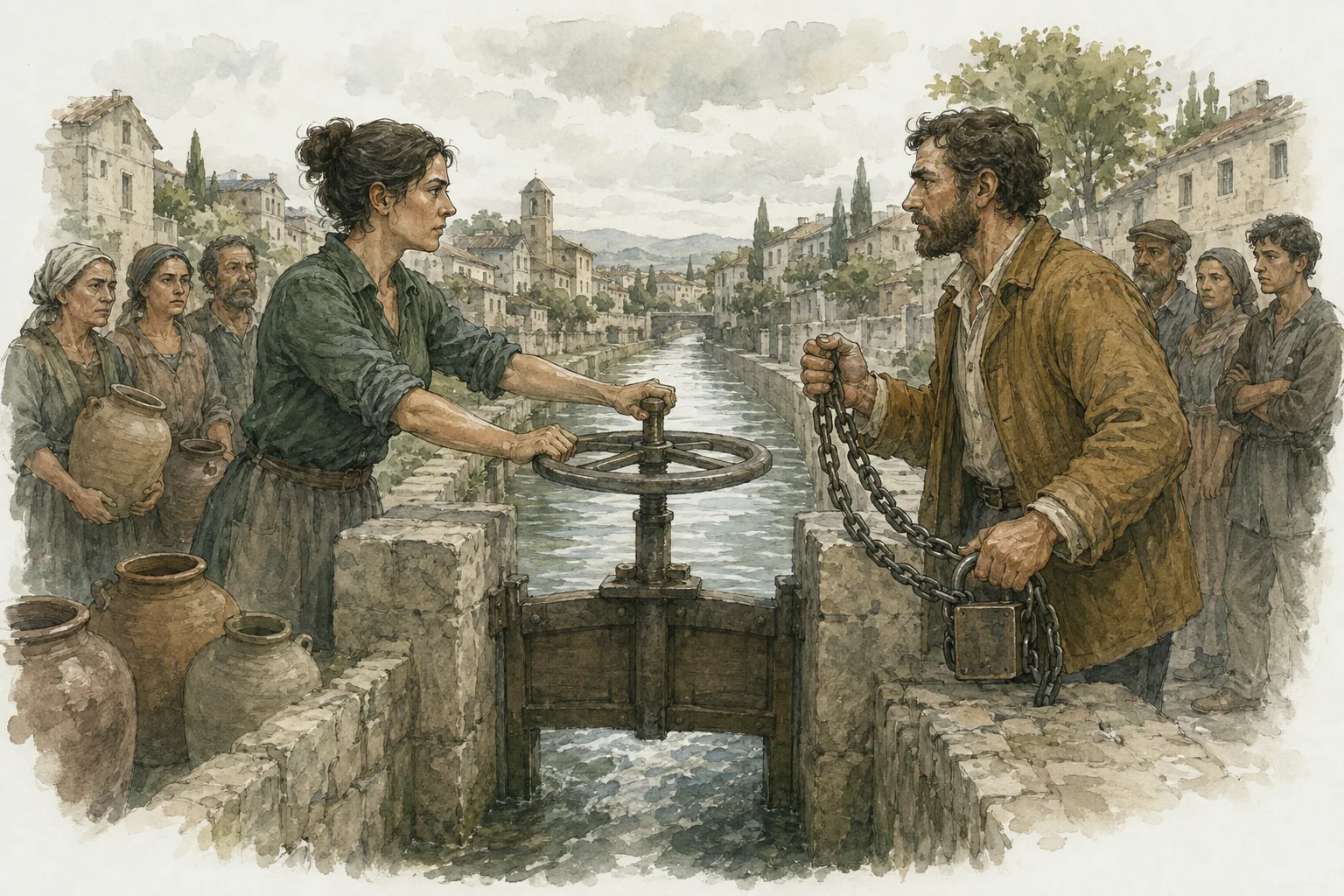
A villain and a shadow are different descriptions. “Villain” commonly evaluates a person’s harmful conduct; “shadow” interprets their function within a symbolic or dramatic relationship. An antagonist can oppose the protagonist for defensible reasons. A sympathetic character can carry an unacknowledged desire that complicates the hero’s self-image.
Separate Jung’s term from the plot role
In Jungian psychology, the shadow concerns aspects of the personality that a person does not recognize or accept as part of themselves. Those aspects are not necessarily all bad. Assertiveness, vulnerability or creativity can be disowned under particular personal and social conditions. The theory is interpretive, not a diagnostic shortcut for judging other people.
Vogler adapts psychological language for dramatic analysis. A threatening figure can externalize something the hero fears becoming or refuses to recognize. That is one possible reading. It does not establish that every antagonist secretly represents the hero’s mind, nor does it replace the antagonist’s material interests and independent history.
Examples with different relationships
Darth Vader in A New Hope (1977) embodies an intimidating form of power aligned with the Empire. In analyzing that film alone, do not import family revelations from later installments as if the first film has already made them available. A trilogy-level reading can develop a different shadow relationship, provided it identifies the broader scope.
The Wicked Witch in the 1939 Wizard of Oz threatens Dorothy and her companions through a concrete conflict over the slippers. She is a direct antagonist. A symbolic reading may connect her to Dorothy’s fears, but the plot also gives her an external aim. The two levels of explanation should remain distinguishable.
In Macbeth, ambition, fear and the attempt to secure power become increasingly destructive within the protagonist himself. There is no need to locate all darkness in a separate villain. The drama can make the central figure both the agent of action and the source of the harm that drives it.
Gollum in The Lord of the Rings can be read as a possible future for a Ring-bearer. That comparison gives Frodo’s mercy special pressure: the threatening other is not wholly separate from his own vulnerability. Yet Gollum remains a character with a history, rather than merely an illustration of Frodo’s risk.
Give opposition an intelligible shape
An effective opponent wants something and acts under conditions. Understanding that motive does not excuse harm. It lets the audience follow the conflict and assess the protagonist’s response. An antagonist who becomes crueler only when a scene needs tension may feel less threatening than one whose choices follow a recognizable logic.
Compare the methods of hero and opponent. Do both treat people as tools? Do both justify secrecy through a worthy goal? A difference in degree can be more revealing than an absolute contrast. The story may test whether the protagonist can resist adopting the opponent’s methods while pursuing a similar end.
Common pitfalls
A “weak shadow” need not mean an insufficiently powerful villain. The problem may be that the opposition does not touch the protagonist’s central conflict. Adding weapons or cruelty will not solve that disconnection. Ask what the opponent makes the hero decide that an ordinary obstacle would not.
Avoid equating unfamiliar cultures, disability, gender nonconformity or visible difference with moral darkness. Such conventions can carry inherited prejudice under the appearance of timeless symbolism. A critical reading names how the work constructs threat and whose perspective it privileges.
A resolution also need not destroy the shadow figure. Recognition, refusal, accountability or a changed relationship may be more fitting than annihilation. The work’s particular conflict should determine what counts as a meaningful response.
Diagnostic question: what does this opposition reveal about the protagonist’s values, and what would victory mean if the protagonist adopted the opponent’s methods?
Sources & further reading
Source notes identify the model or work discussed. Story mappings and diagnostic questions are this site’s interpretations.
- Christopher Vogler — The Writer’s Journey: Mythic Structure for Writers. 25th Anniversary Edition, Michael Wiese Productions, 2020. Author’s account of the memo, book and flexible use of the model; stage and archetype discussions refer to the book.
- C. G. Jung — The Archetypes and the Collective Unconscious. Collected Works 9, part 1; second edition, translated by R. F. C. Hull, 1969. A historical psychological theory, distinguished here from dramatic roles.
- Victor Fleming, director — The Wizard of Oz. MGM, 1939. Library of Congress exhibition documents the film adaptation and distinguishes it from Baum’s book.
- George Lucas, writer and director — Star Wars: Episode IV—A New Hope. Lucasfilm, 1977; originally released as Star Wars. Official film record. Our mapping concerns this film alone and is interpretive.
- J. R. R. Tolkien — The Hobbit; The Lord of the Rings. The Hobbit, 1937, revised second edition 1951; The Lord of the Rings, 1954–1955. The Estate’s works directory. The examples refer to the books, not the Jackson films.
- William Shakespeare — Macbeth. Folger Shakespeare Library online edition; first printed 1623. Readable primary text for the tragic-protagonist example.