Influence: The Psychology of Persuasion
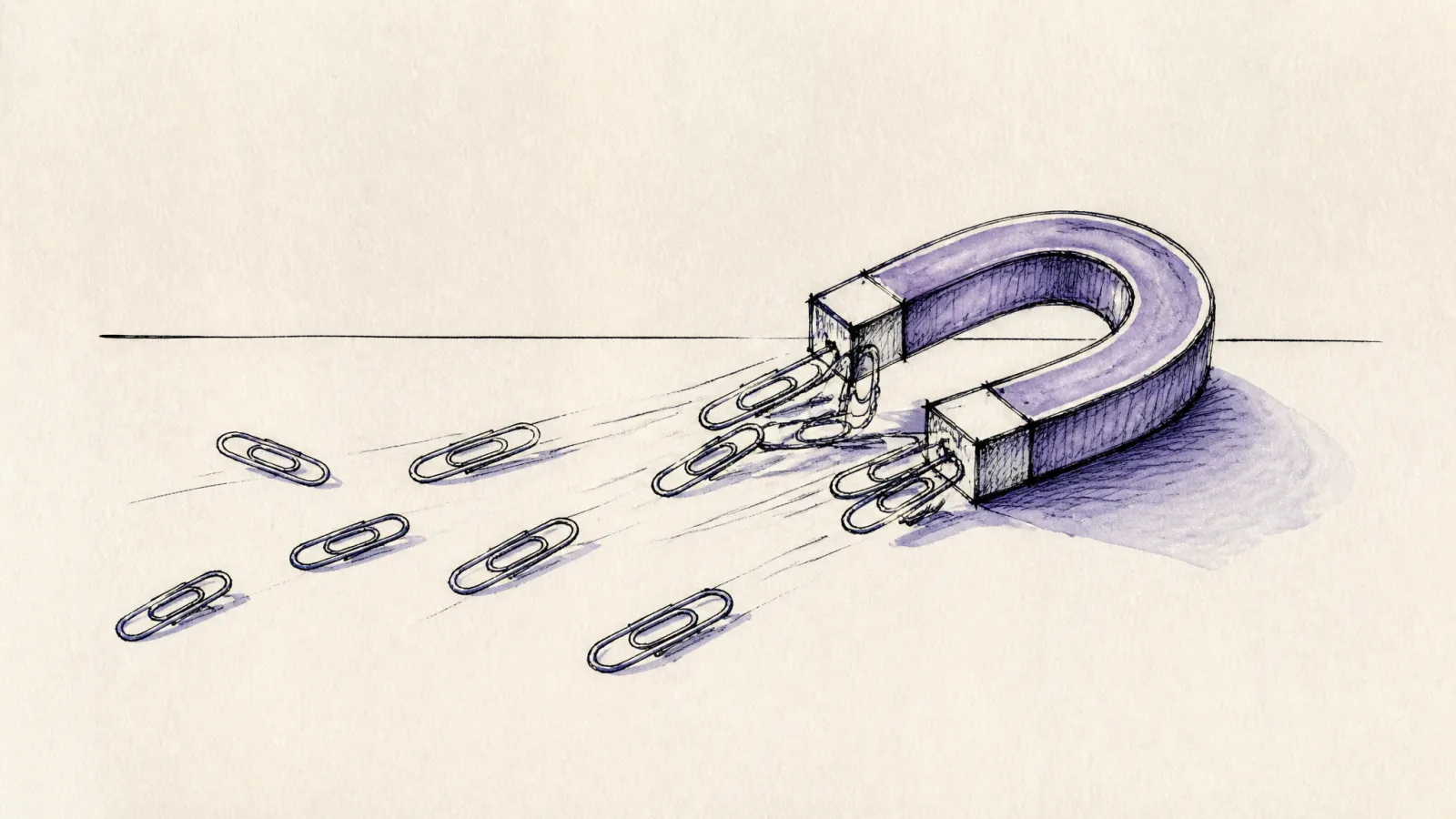
Cialdini spent years inside the compliance professions — sales floors, fundraising operations, recruitment — asking one question: what makes people say yes when they haven’t really decided to? The answer became the most cited catalogue in applied psychology: reciprocity, commitment and consistency, social proof, liking, authority, scarcity — and, in the 2021 edition, unity. Fixed-action patterns, he calls them: the click of the trigger, then the whirr of the automatic response.
The ideas that stick
- ReciprocityUnrequested favors create real obligation. Consulting runs on this — every free workshop is also a lever, admit it or not.
- Commitment and consistencySmall public commitments compound. The pilot project is persuasion architecture, not just risk management.
- Social proofUncertain people copy similar people — why the case study from a peer company outsells any argument you can construct.
- Authority and likingCredentials and rapport open doors arguments can't. Uncomfortable, measurable, true.
- ScarcityLosses loom larger than gains; limited availability moves decisions that value alone won't.
Where it creaks
Some of the supporting studies belong to social psychology’s replication-troubled era, and the individual experiments deserve more skepticism than the book’s confident tone invites — though the principles themselves rest on wider evidence than any single study. The examples (Tupperware parties, car lots) are period pieces. And the book describes levers without much guidance for people who pull them professionally; Cialdini’s ethics chapters are earnest but thin. The newest edition is the one to buy — unity is a genuine addition, not a marketing bump.
Essential — not because it’s flawless, but because everyone across the table has read it, and the levers work on you either way.
Read it if
- You've never read it — it's the assumed background of every influence conversation since
- You want to recognize the levers being pulled on you in every renewal cycle
- You advise on anything involving adoption, buy-in, or change
Skip it if
- You've absorbed it secondhand and want new material — go straight to Pre-Suasion
- You want field tactics for consultants specifically; this is the science, not the application