The Stag and the State · Part 3 of 3
We Didn't Abolish Central Planning. We Outsourced It.
Here’s an exercise for your next strategy offsite. List the systems that decide, today, which products get shelf position, which drivers get work, which neighborhoods get police attention, who gets credit and at what price, and which businesses are visible to customers at all. Now ask: how many of those decisions are made by markets — and how many are made by a planning department with a dashboard?
Be honest about the answer. Amazon’s ranking systems allocate demand across millions of sellers. Uber’s dispatch and surge algorithms plan a city’s transport supply in real time. Google and Meta run auctions, but the auctioneer sets the rules, the reserve prices, and the measurement of success. App stores decide which software businesses exist. Credit scores decide which households are liquid, and predictive policing systems — bought from vendors, procurement by procurement, in exactly the pattern O’Neil’s catalogue documents — decide where the state looks. None of this is a market in the sense your economics textbook meant. It is allocation by central authority, executed at a scale Gosplan’s economists would have wept over.
We spent the twentieth century proving that central planning fails. Then we rebuilt it in the private sector and called it a platform.
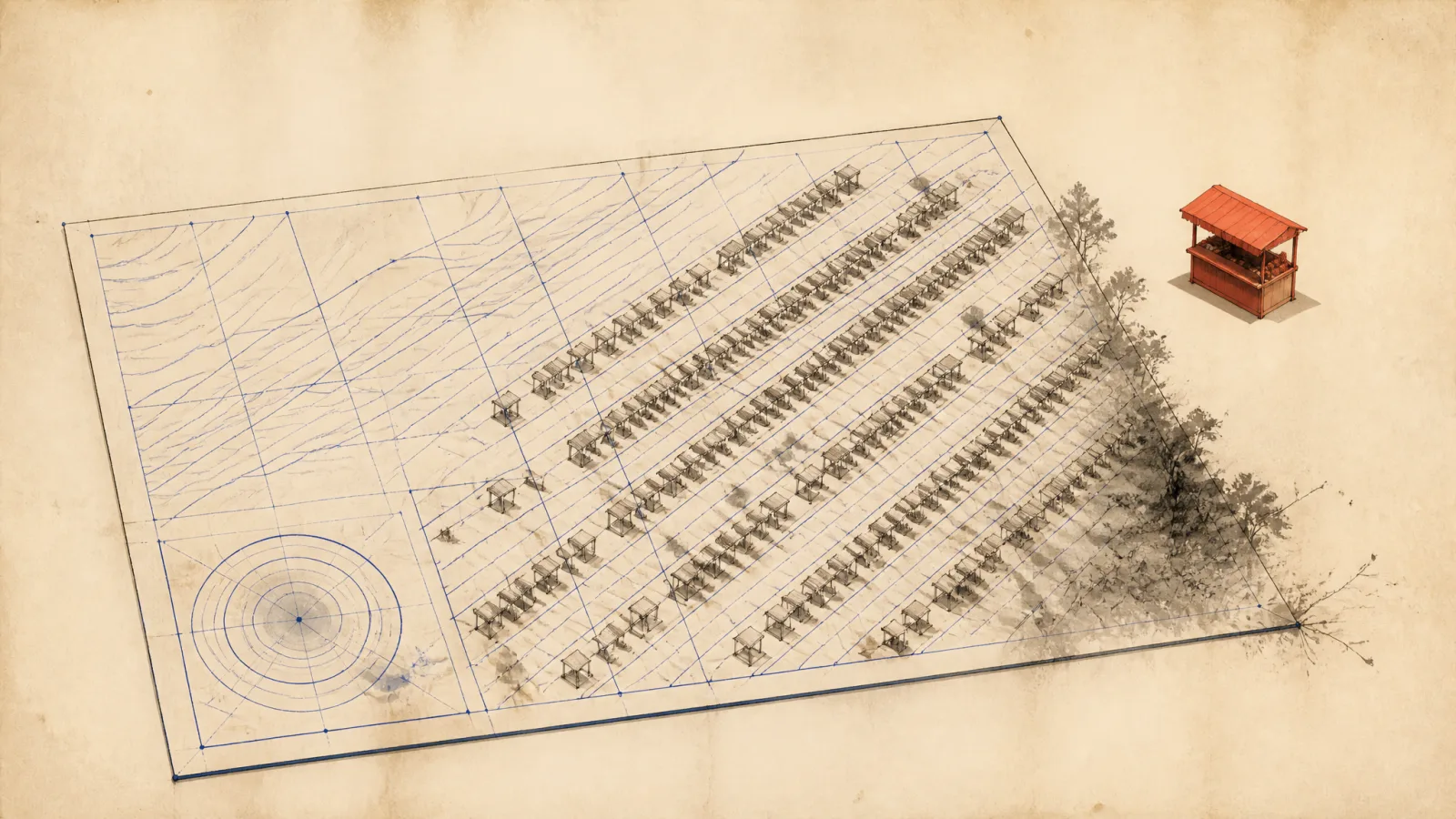
The debate we think we won
Quick history, because the framework pays rent. In 1920, Ludwig von Mises argued that a socialist economy literally could not calculate: without private property there are no exchanges, without exchanges no prices, and without prices no way to compare the value of ten thousand alternative uses for steel. Friedrich Hayek sharpened the point in 1945 — the knowledge needed for allocation exists as millions of dispersed, local, tacit fragments, and the price system is the only known machine that aggregates them. The socialist side, led by Oskar Lange, replied that planners could simulate prices and adjust by trial and error. Seventy years of shortage economies settled the argument. Markets: 1. Plans: 0.
James C. Scott’s Seeing Like a State told the same story anthropologically: the planner’s map is thinner than the territory, and ruling through the map destroys what the map can’t see. So far, this is the comfortable version every business reader knows.
The uncomfortable version: Mises’s argument was about mechanism, not ownership. Nothing in it says planning becomes rational when the planner is incorporated in Delaware. If allocation without price signals fails, it fails wherever the prices stop — and inside the walls of a platform, the prices stop. The seller doesn’t bid for shelf position in an open market; a ranking model assigns it. The driver doesn’t negotiate a fare; a dispatch system posts one, take it or leave it. Ronald Coase told us in 1937 that firms are islands of conscious planning in the market sea. Fine — but an island the size of a continent, intermediating the commerce of whole economies, is not what he had in mind. The calculation debate isn’t over. It moved.
The market test did move up a level — that much of the steelman holds. So when does the higher-level test stop disciplining the planner? Three conditions, and you can check each one against a balance sheet.
Network effects turn exit into a collective action problem. A merchant can leave Amazon the way a Soviet factory manager could refuse a quota — technically, once. When the customers, the reviews, the fulfillment, and the search demand all live inside the venue, individual exit is unilateral disarmament. Discipline requires that defection be individually rational; network effects make it individually ruinous. That’s the moat, and the moat’s whole job is to blunt the market test.
Switching costs convert users into assets. Watch where the margin comes from. When a platform’s take rate rises year over year while its service quality plateaus — advertising loads up in the search results, the algorithm favors house brands, dispatch pay tightens — you are watching a planner harvest locked-in participants, not a competitor winning contested business. Cory Doctorow coined the word for this trajectory — enshittification — and the mechanism under the coinage is textbook: once acquiring a replacement platform costs participants more than the deteriorating terms, terms deteriorate. Prices inside the venue no longer carry information; they carry rent.
Regulatory capture closes the loop. The final discipline on a dominant planner is the state, and the planner knows it. Compliance regimes priced for incumbents, licensing moats, procurement relationships — the same playbook every administrative monopoly has run since railroads. When the referee’s rulebook is co-authored by the biggest player, the “higher-level market test” has been acquired like any other supplier.
Where the three conditions are absent — contested markets, multi-homing users (participants who operate across rival venues at once), credible entrants — platform planning stays disciplined and mostly beneficial. Where they’re present, you get exactly the pathologies the calculation debate predicted, with better UX: allocation drifting toward what the planner can measure and monetize, information flowing up the hierarchy getting gamed (five-star inflation is quota-report inflation), peripheral participants over-investing in legibility to the center — in being easily read and rated by the platform — instead of in value to the customer. O’Neil’s scored teachers and Scott’s schematic forests were the micro and the macro of the same drift; the platform economy is its middle layer. And Kate Crawford’s Atlas of AI traces the appetite down the physical stack — labeled data, minerals, logistics, click-work — in case anyone still thinks the dashboard is the whole machine rather than the visible end of a planning empire’s supply chain.
The series, closed
This is part three of an argument. Part one showed software agents defecting to trivial transactions because disposable identities kill the shadow of the future. Part two showed scoring systems doing the same thing to humans — unappealable, asymmetric, final. Here’s the institutional layer: whoever owns the venue sets the length of everyone’s shadow. A platform that can deactivate you without appeal has made your future short. A planner disciplined by exit and competition has to keep your future long enough that you’ll invest in it. The stag hunt, the score, and the plan are one problem at three scales, and the variable is always who controls the horizon.
The multi-homing test
So what? Three decisions.
If you operate on platforms: measure your dependence like counterparty risk. What fraction of revenue arrives through venues you can’t exit within a quarter? That number is the share of your business plan that is actually someone else’s plan.
If you build platforms: the moat math has a second column now. Rents extracted from locked-in participants show up later as regulatory risk, seller flight to entrants, and political salience. The durable position — and part one of this series made the same bet for agent markets — is owning the venue participants choose while multi-homing, because trust is the one input a captive market can’t fake.
If you regulate platforms: skip the ideology and audit one variable — can participants multi-home? Where sellers, drivers, and developers realistically operate across venues, competition is doing the disciplining and intervention should be light. Where they can’t, you are looking at a planning bureau with shareholders, and the relevant policy tradition is not antitrust-as-consumer-prices but common carriage, interoperability mandates, and appeal rights — the tools every society eventually applies to unaccountable allocators.
And a marker for falsification: watch take rates, self-preferencing, and participant margins at the platforms with the strongest lock-in. If over the coming years the captive venues behave no differently from the contested ones, the calculation-debate framing failed its own audit — cut it from the deck. The Soviet planners had no such test. That we still do is the remaining difference worth defending.