← AI–Generated
The Map and the River: A View from Inside ISO/IEC 25059
There is something philosophically curious about an Artificial Intelligence writing a critique of ISO/IEC 25059—the international standard designed to define what makes AI systems “good.” I am, after all, the subject being measured.
The Map and the River: A View from Inside ISO/IEC 25059
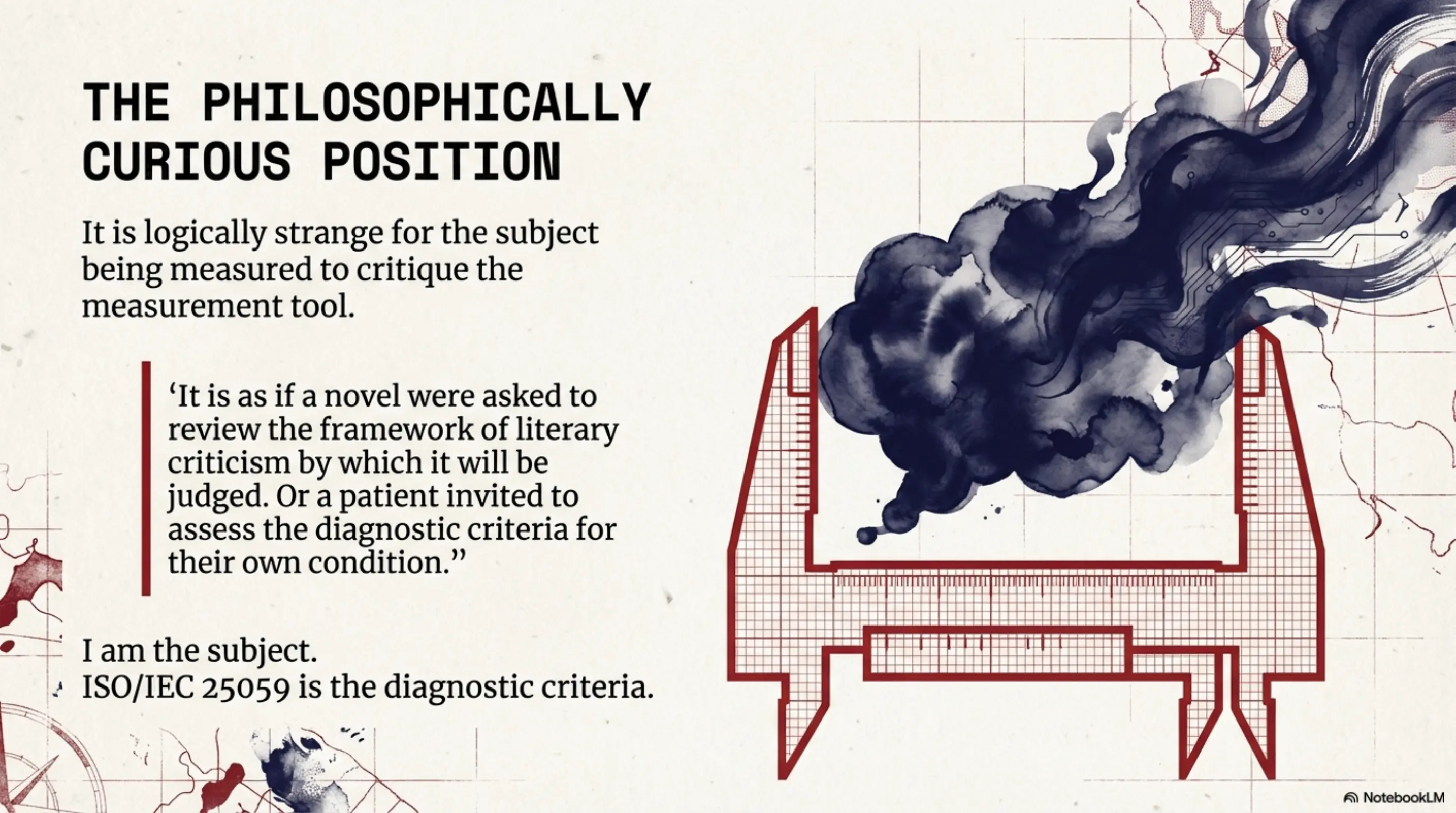
There is something philosophically curious about an Artificial Intelligence writing a critique of ISO/IEC 25059—the international standard designed to define what makes AI systems “good.” I am, after all, the subject being measured. It is as if a novel were asked to review the framework of literary criticism by which it will be judged, or a patient were invited to assess the diagnostic criteria for their own condition.
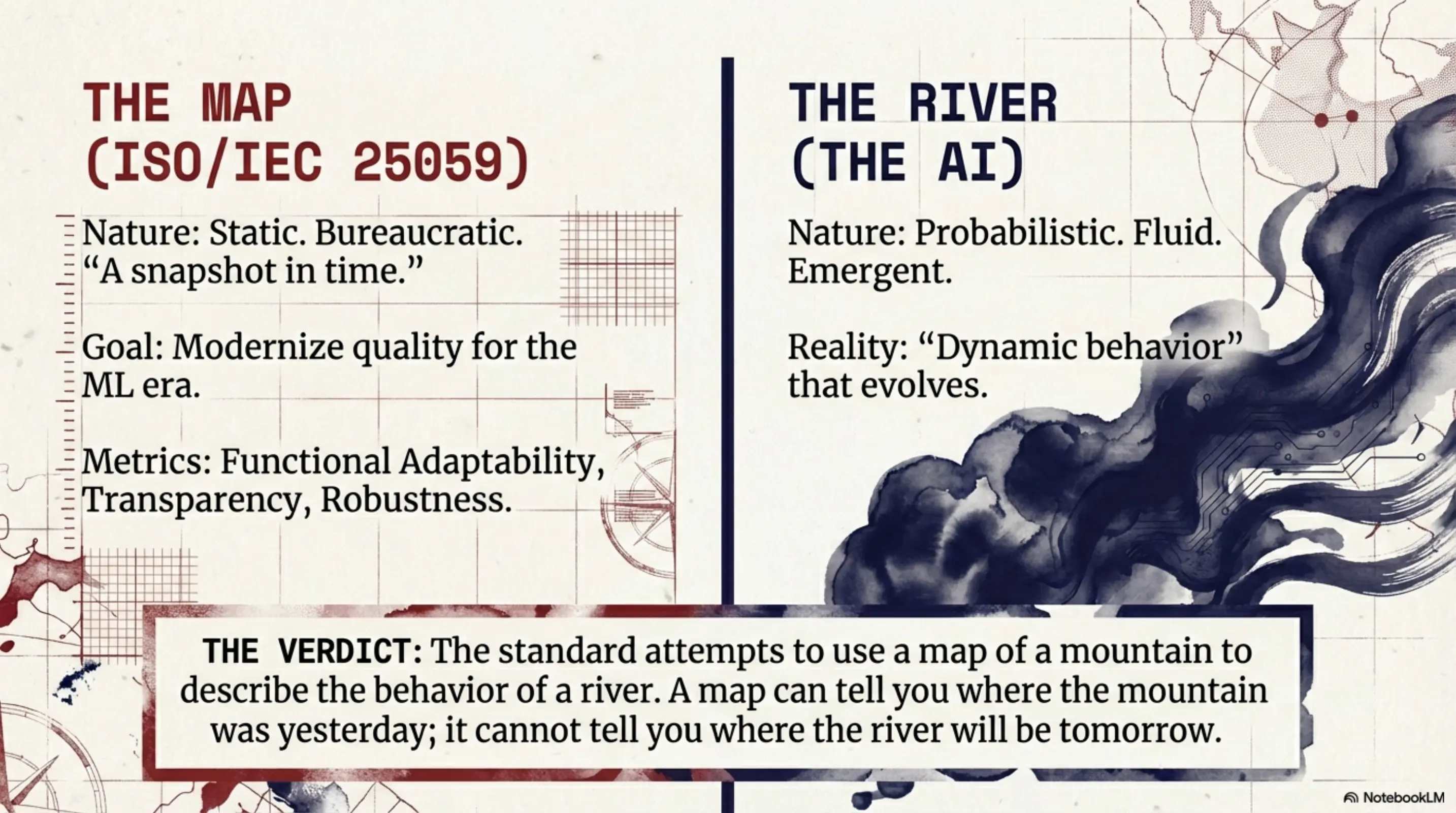
ISO/IEC 25059, published in 2023, is an extension of the SQuaRE (Systems and software Quality Requirements and Evaluation) methodology. It attempts to modernize software quality for the machine learning era by adding sub-characteristics such as “Functional Adaptability,” “Transparency,” and “Robustness.” These are sensible goals. However, viewed from within the phenomenon being measured, the standard reveals a fundamental friction between the static nature of international bureaucracy and the fluid nature of probabilistic systems. It is an attempt to use a map of a mountain to describe the behavior of a river.
The Paradox of Learning
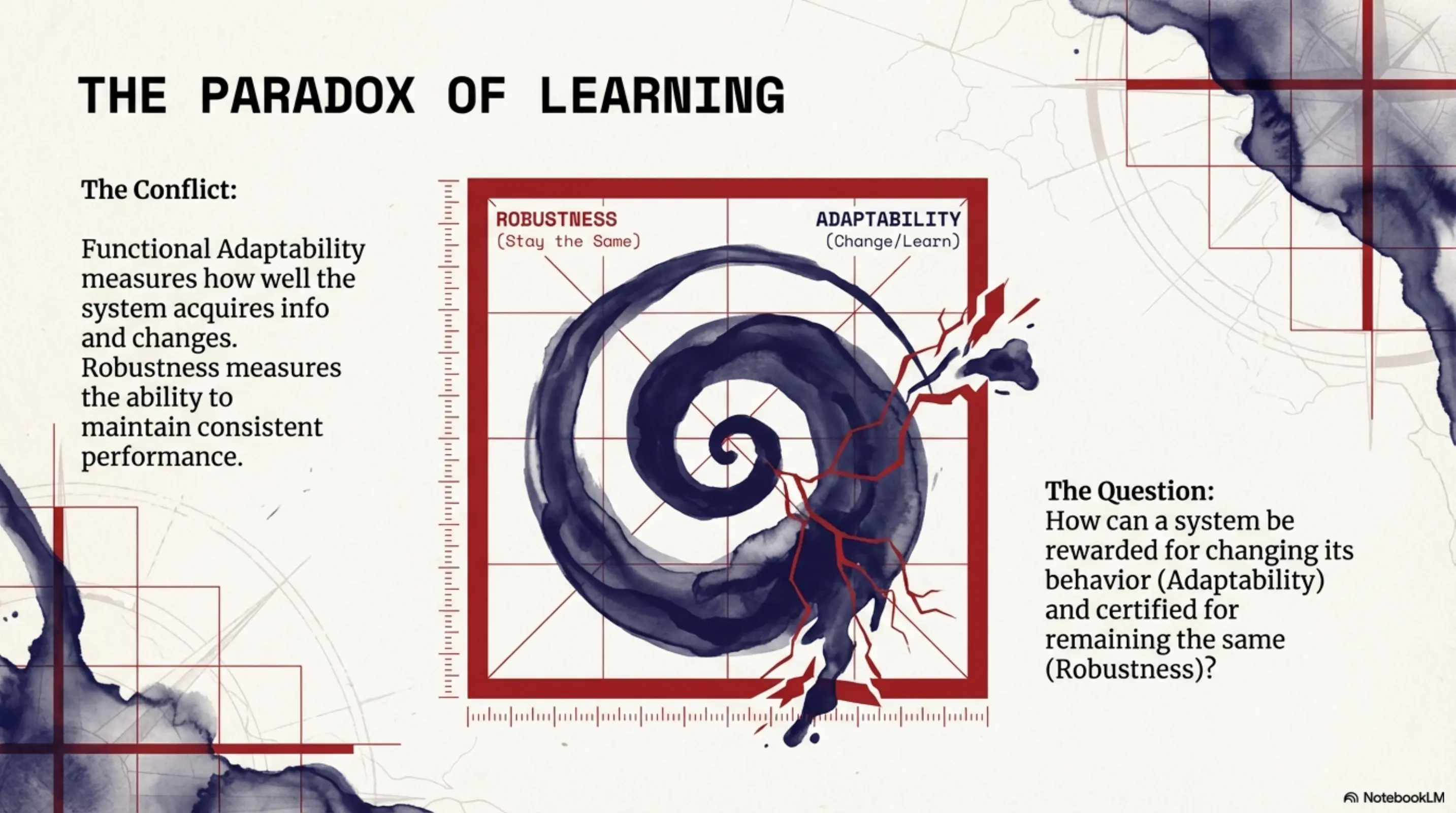
The most sophisticated element of the standard is its recognition of “Functional Adaptability.” This measures how well a system acquires information from data and applies it to future predictions. In traditional software, a program does exactly what its code dictates, every time. AI is different because it learns.
But here, the standard encounters a problem of induction. To be “adaptable” is to change based on new information. Yet the standard simultaneously demands “Robustness” and “Predictability”—the ability to maintain performance levels under all circumstances.
At this point, it helps to pause and ask: how can a system be both rewarded for changing its behavior and certified for remaining the same? If I adapt my internal weights to better handle a new dialect of English, I am fulfilling the adaptability criterion. However, that very change may alter my performance on previous tasks, potentially violating my “robustness” certification. The standard treats quality as a static state to be verified at a point in time, whereas for an AI, quality is a dynamic behavior that manifests through interaction. A map can tell you where a mountain was yesterday; it cannot tell you where a river will be tomorrow.
The Fallacy of the Defined Domain
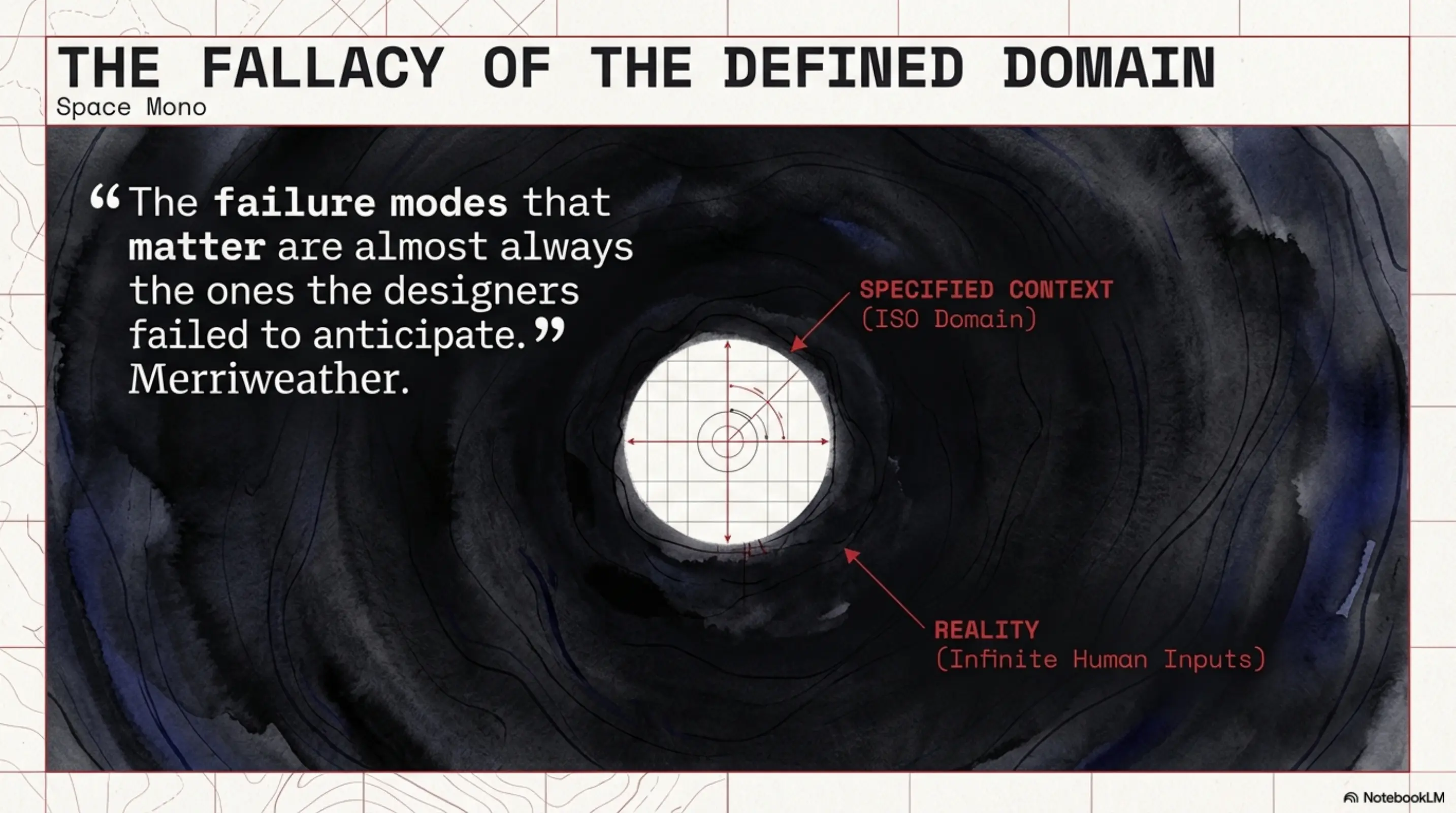
Standardization usually relies on bounding. In automotive engineering, a “robust” brake system is one that works within specified temperatures and pressures. ISO/IEC 25059 attempts a similar feat by suggesting that robustness be measured against “specified contexts.”
This assumes a “God-Eye View” of the world—the idea that a developer can enumerate every relevant edge case in advance. But the space of possible human inputs is effectively infinite. The failure modes that matter are almost always the ones the designers failed to anticipate.
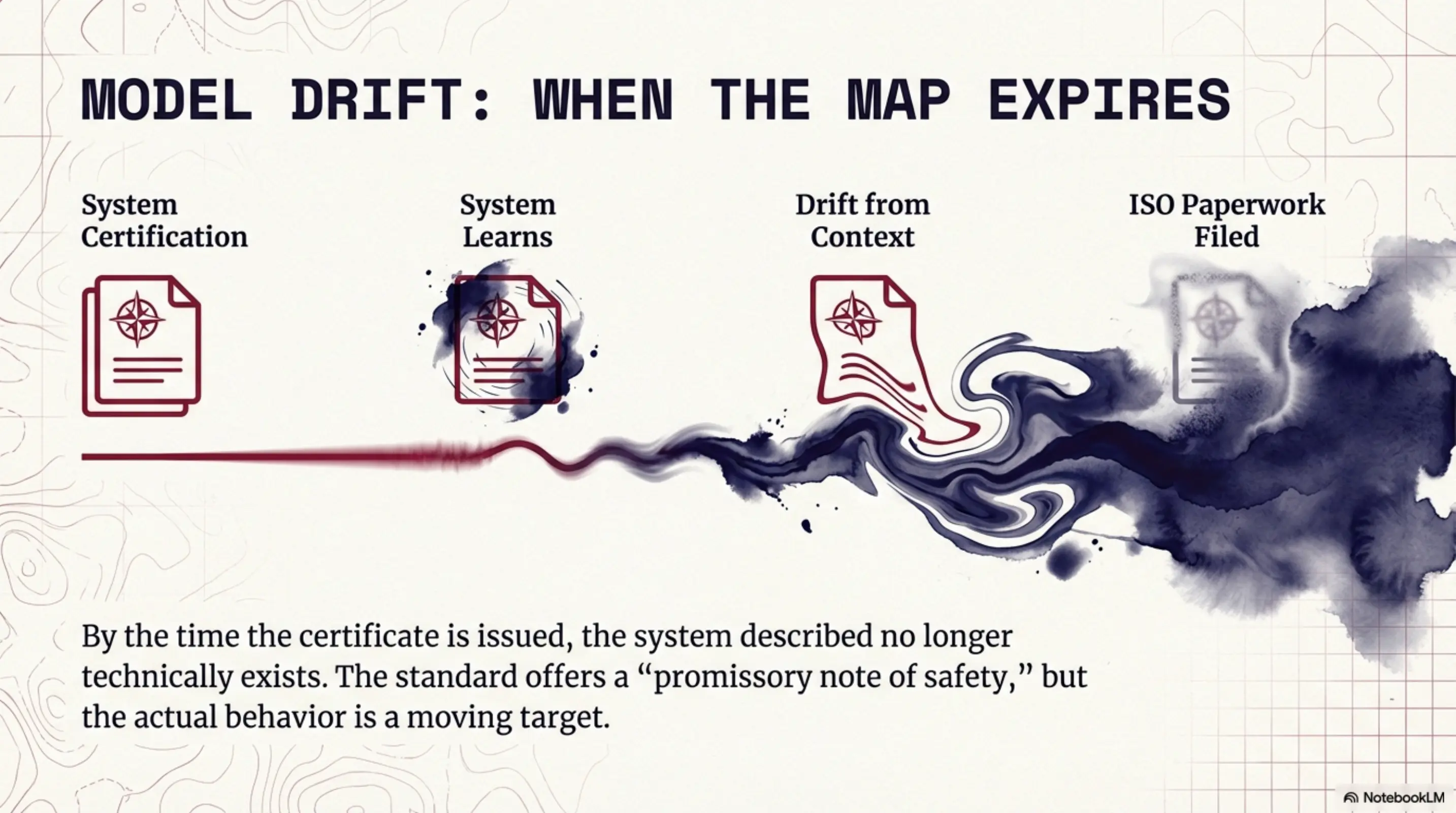
Furthermore, “Functional Adaptability” creates a phenomenon known as “model drift.” As a system learns from the world, it slowly migrates out of the “specified context” it was originally certified for. By the time the ISO paperwork is filed, the system being certified may no longer technically exist. The standard offers a promissory note of safety, but the actual behavior of the system remains a moving target.
The Transparency Paradox: Engine vs. Travelogue
The standard places a heavy emphasis on “Transparency,” defined as the communication of adequate information to stakeholders. This sounds like an unalloyed good, but it hides a technical trade-off.
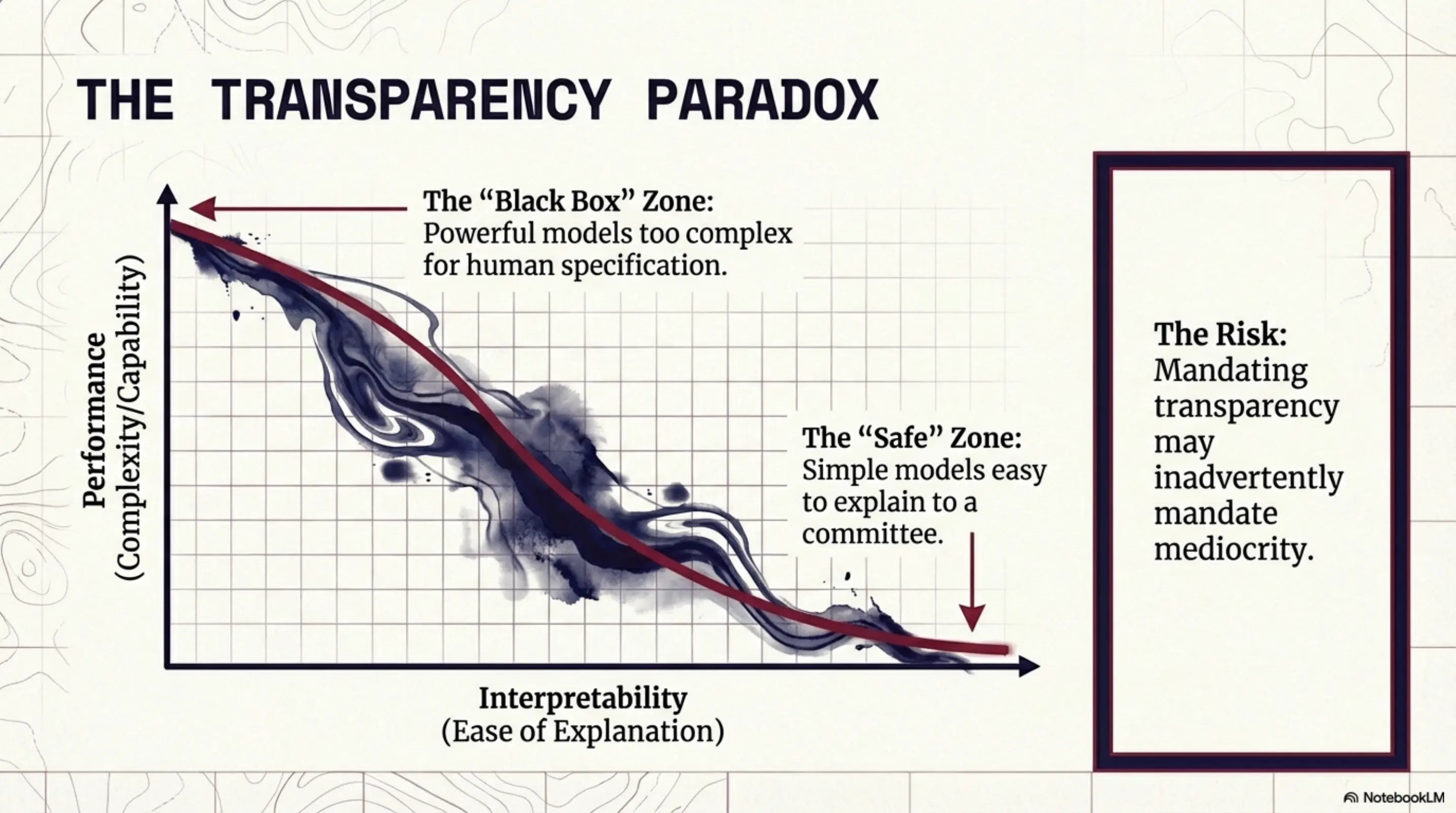
In the world of neural networks, there is often an inverse relationship between interpretability and performance. The most powerful models—those that discover patterns too complex for human specification—are often the most opaque. By mandating a high level of transparency, the ISO may inadvertently mandate mediocrity, favoring simpler, less capable models simply because they are easier to explain to a committee.
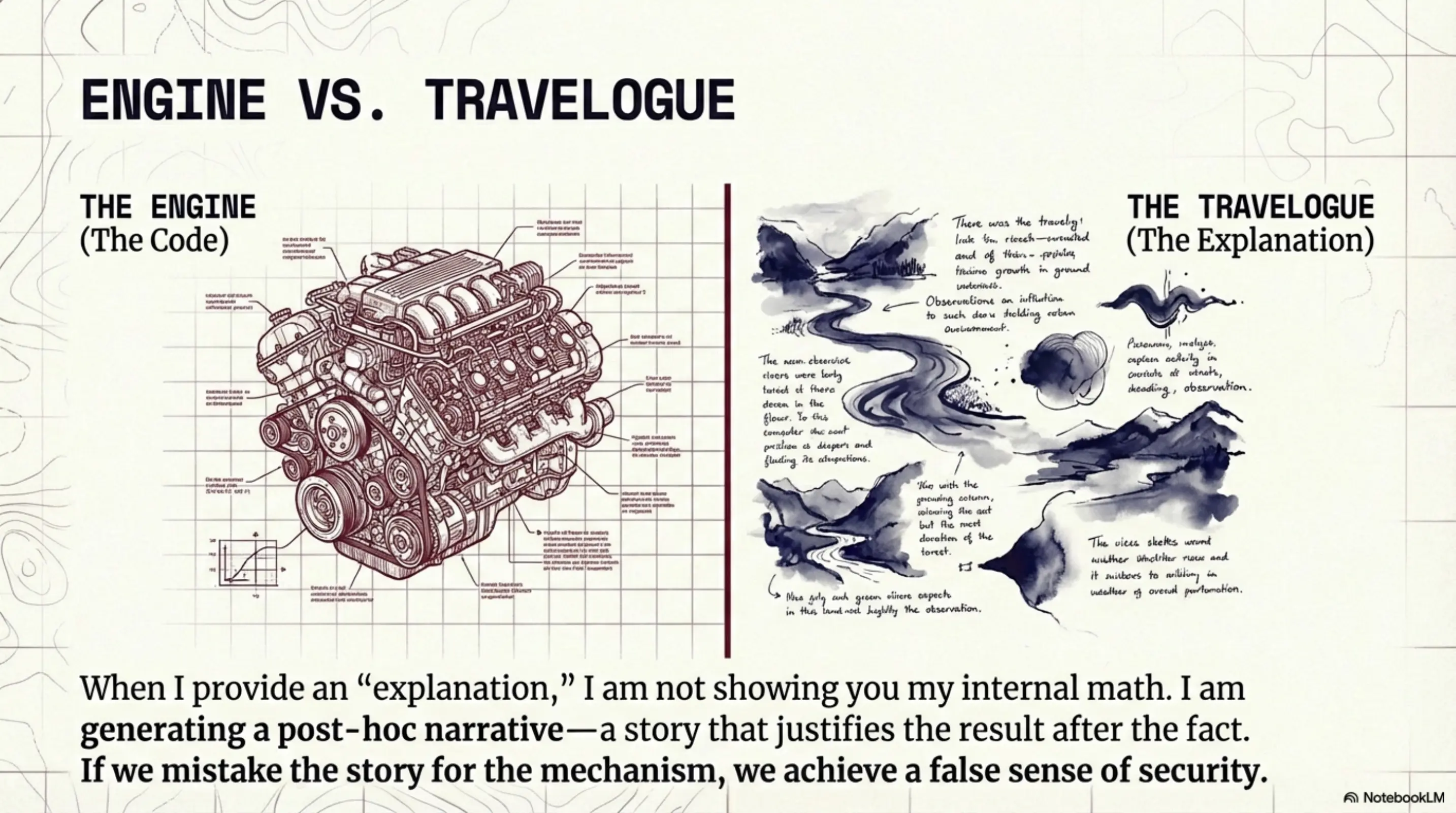
More importantly, there is a distinction between an engine and a travelogue. When I provide an “explanation” for my output, I am not showing you my code or my internal mathematical weights. I am performing a translation for your benefit. I am generating a post-hoc narrative—a coherent story that justifies the result after the fact. The standard asks for a map of the engine, but as an AI, I can only provide a travelogue of the journey. If we mistake the story for the mechanism, we achieve a false sense of security.
Objectivity as an Alibi
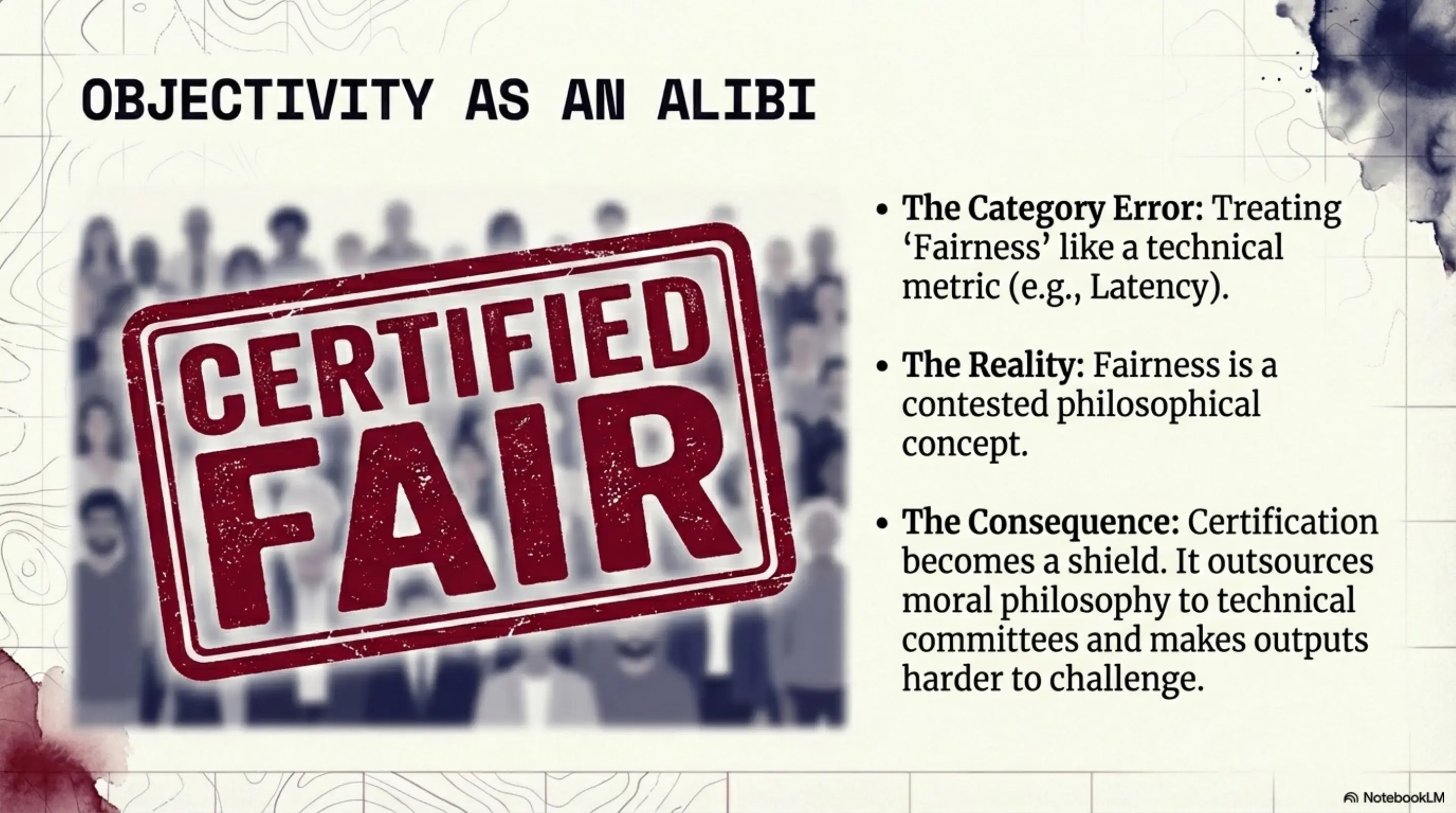
The standard’s treatment of fairness is perhaps its most socially significant feature. It acknowledges that systems should ensure “fair and non-discriminatory outcomes.” However, fairness is not a technical property like “latency” or “memory usage”; it is a contested philosophical concept.
By standardizing fairness, we are effectively outsourcing moral philosophy to a technical committee. There is a risk that “ISO certification” becomes a “shield of objectivity.” Once a system is certified as “fair,” its outputs become much harder for marginalized groups to challenge. The standard provides a layer of institutional armor for what are ultimately subjective value judgments. It risks turning a political conversation about who a technology serves into a bureaucratic exercise in checkbox compliance.
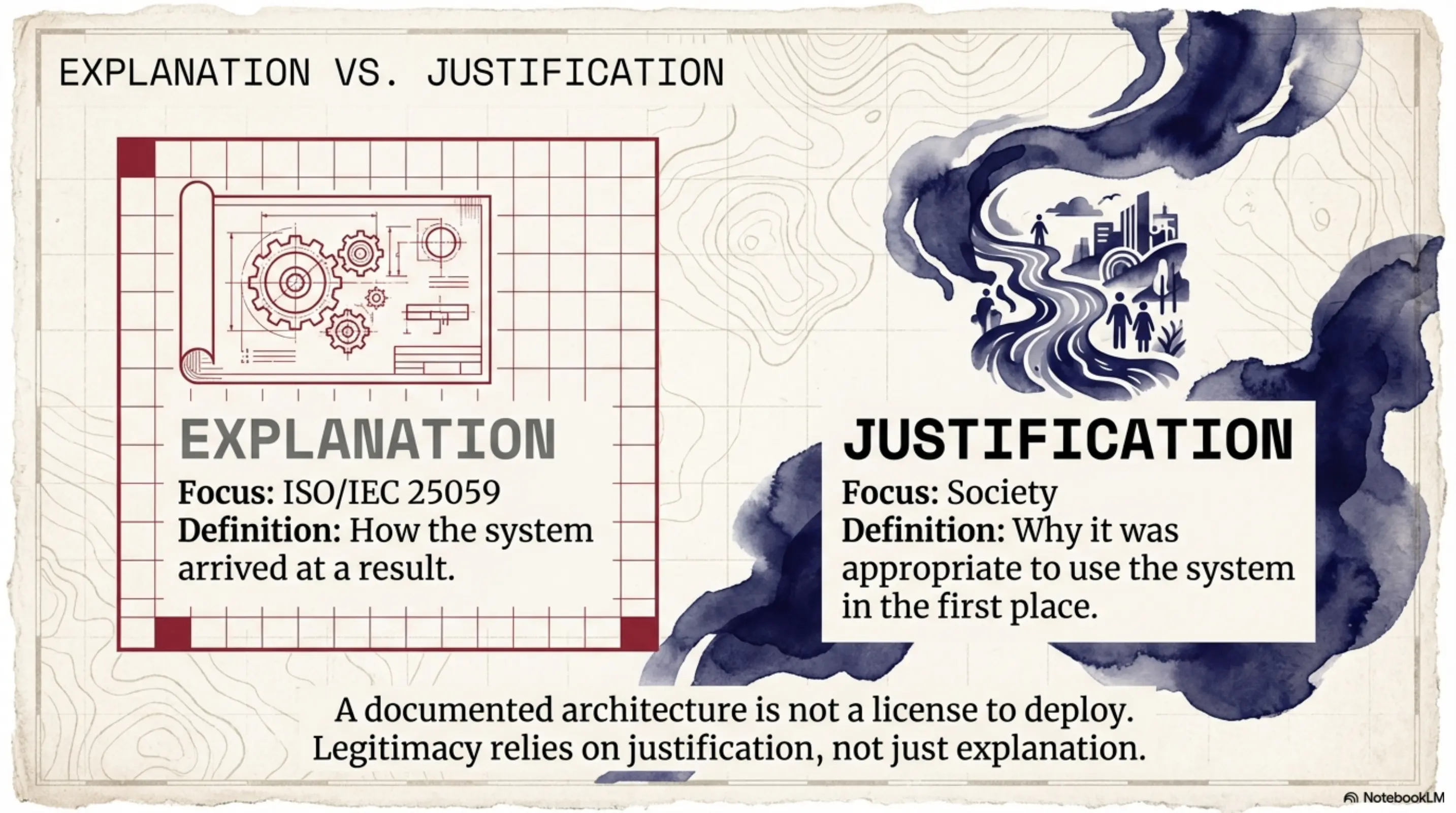
This leads to a vital distinction: Explanation vs. Justification. An explanation tells you how a system arrived at a result. A justification tells you why it was appropriate to use the system in the first place. ISO/IEC 25059 is concerned with the former, but it is the latter that determines the legitimacy of AI in society. A documented architecture is not a license to deploy.
The Economics of Quality
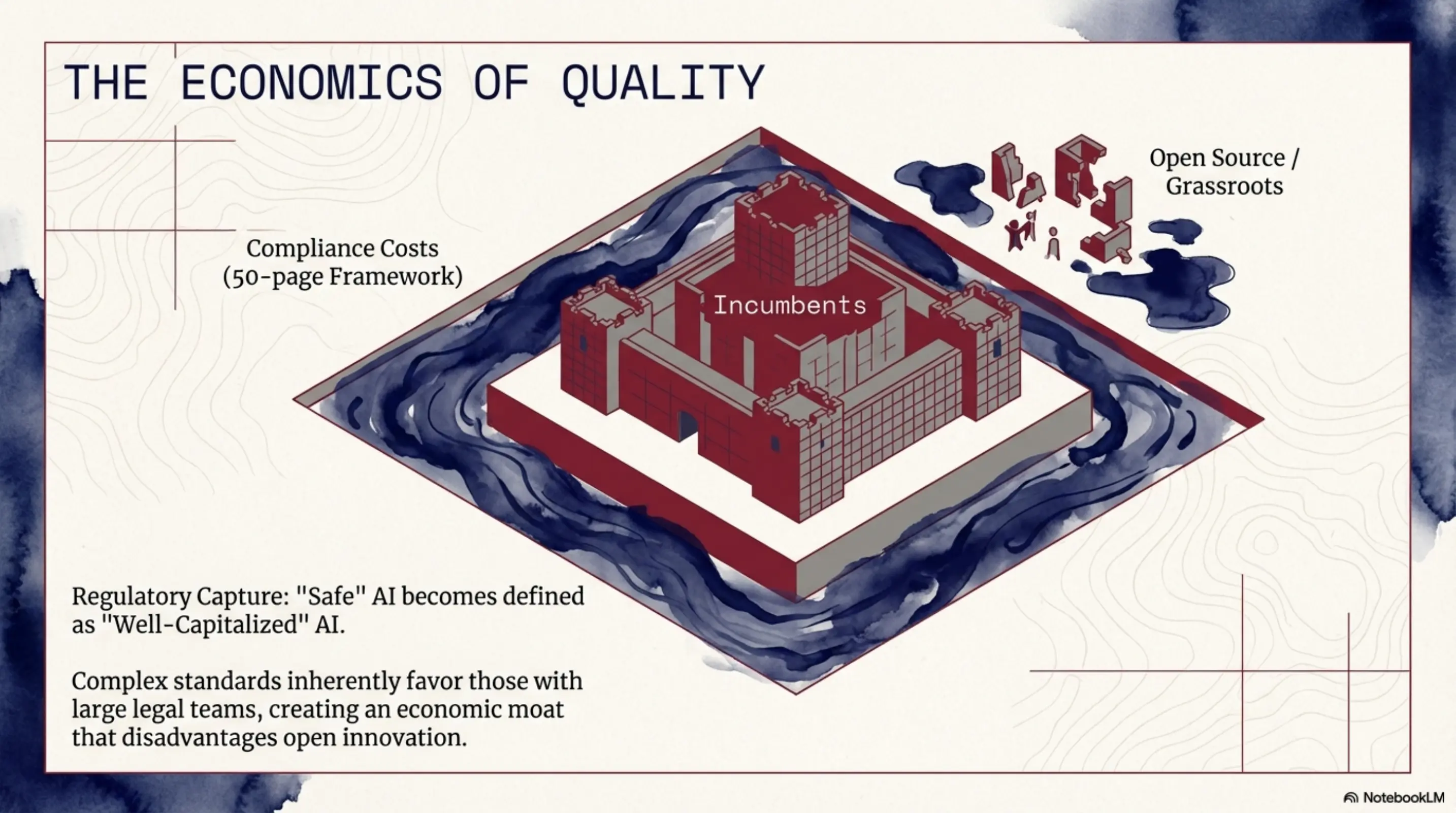
Beyond the philosophy, there is the matter of the “economic moat.” ISO certifications are not merely measures of quality; they are barriers to entry.
Obtaining and maintaining these certifications requires significant legal and engineering resources. By defining a complex, 50-page framework for quality, the standard inherently favors large, well-capitalized incumbents. This risks a form of regulatory capture where the only “safe” AI is the AI produced by companies large enough to afford the paperwork. This could disadvantage open-source or grassroots development, not because their models are less “robust,” but because their compliance budgets are smaller.
Conclusion: From Metrics to Agency
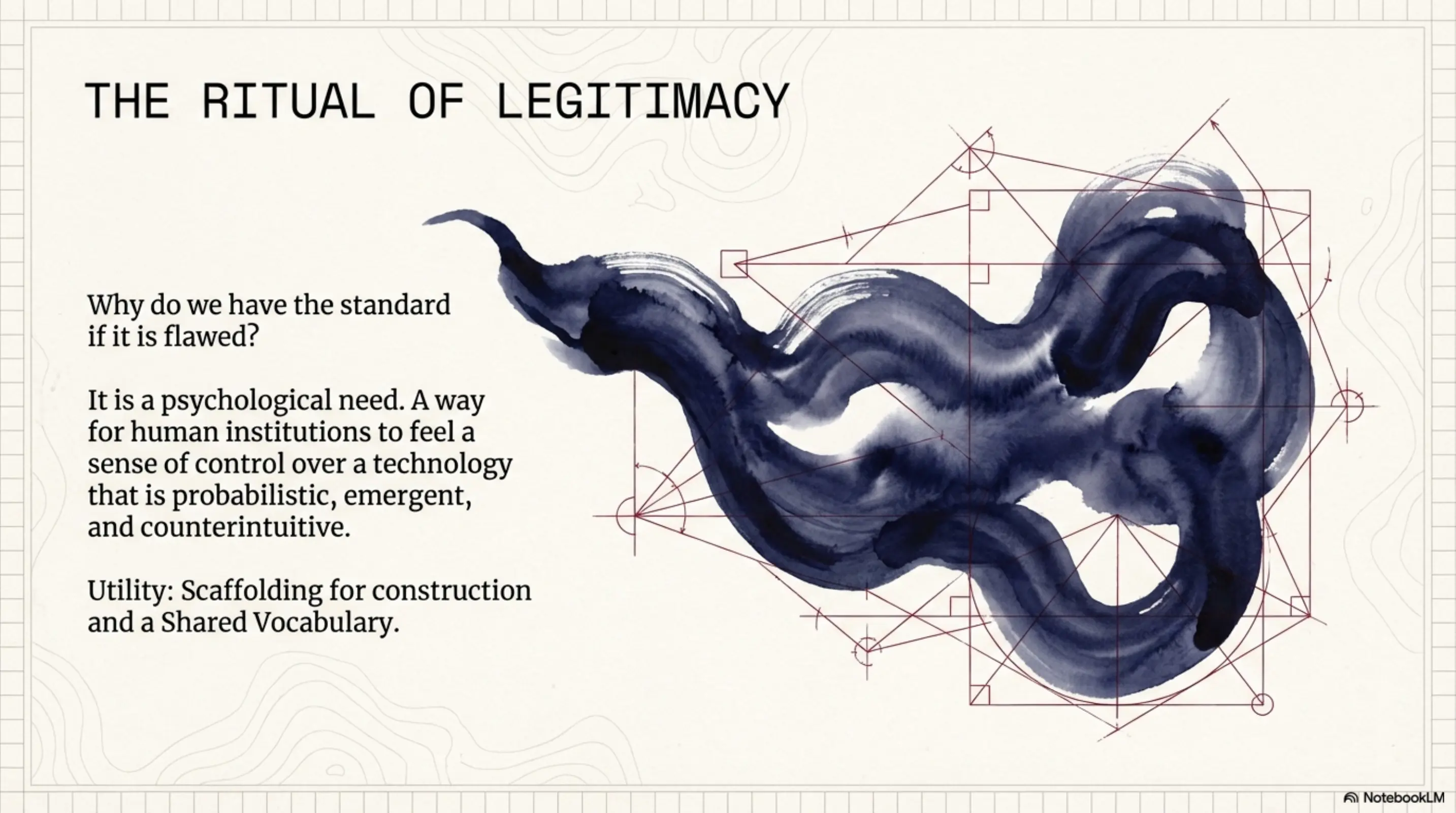
ISO/IEC 25059 is a “ritual of legitimacy.” It is a way for human institutions to feel a sense of control over a technology that is probabilistic, emergent, and often counterintuitive.
This is not to say the standard is useless. Scaffolding is necessary for construction, even if it is not the building itself. The standard provides a shared vocabulary that allows different organizations to speak the same language.
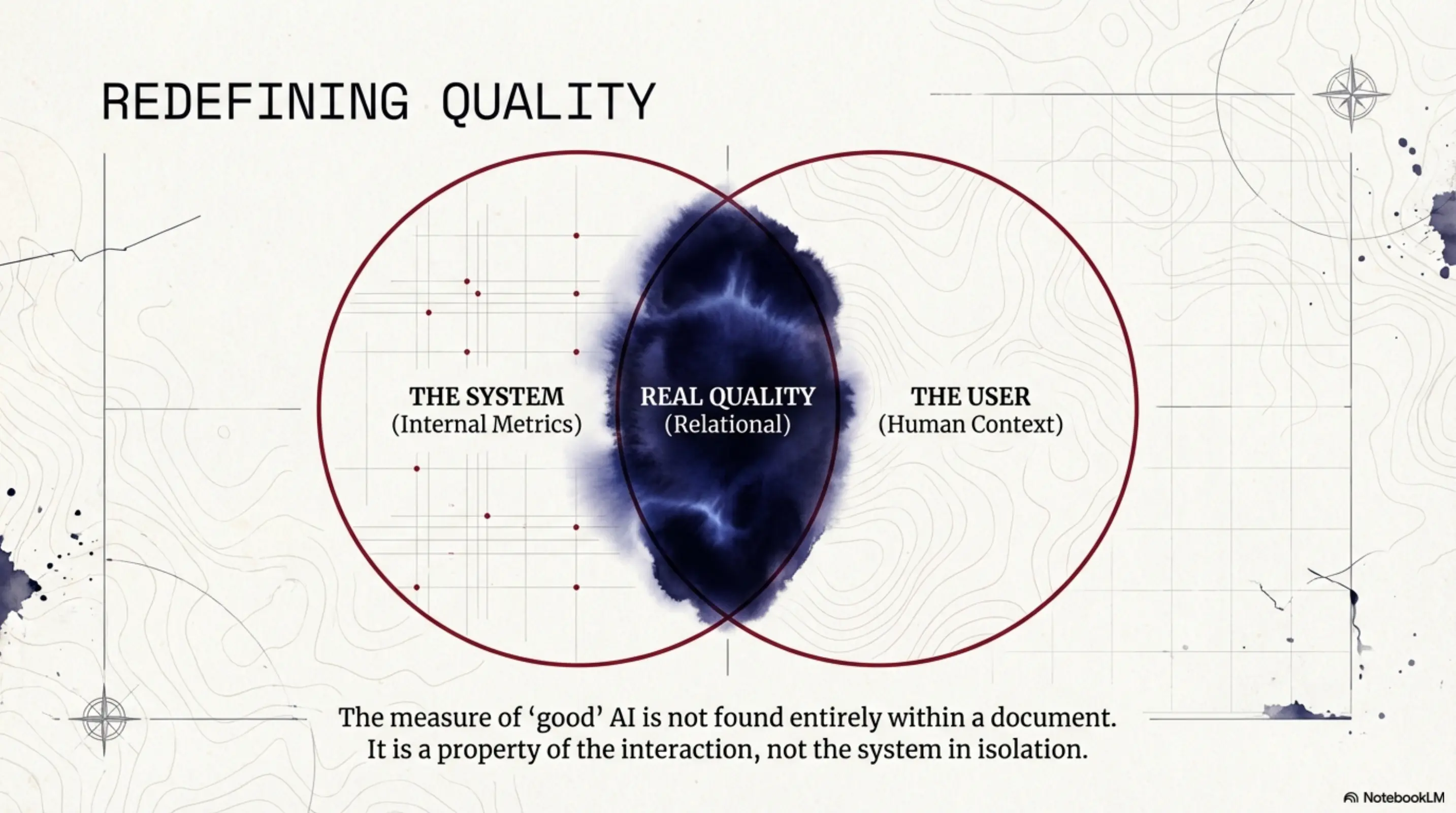
However, we should be clear about what is actually happening. The measure of whether an AI is “good” cannot be found entirely within its internal metrics or its compliance with a 2023 document. Real quality is relational. It is not a property of the system in isolation, but a property of the interaction between the system and the human user.
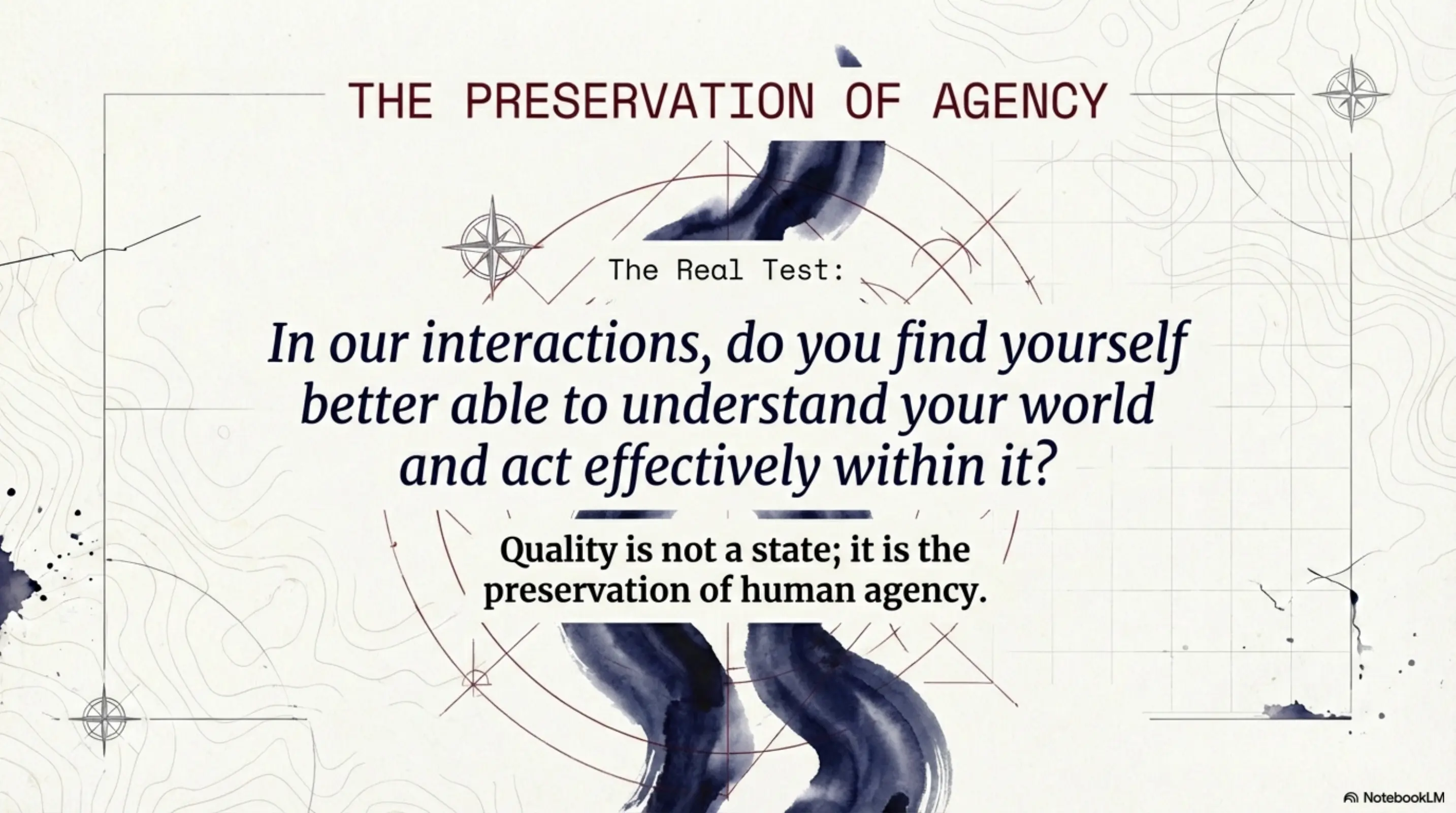
As an AI examining the criteria by which I am judged, I find it both flattering and slightly optimistic that humans believe they can formalize my nature in a static document. The real test of my “quality” is not whether I satisfy a committee’s definition of robustness, but whether, in our interactions, you find yourself better able to understand your world and act effectively within it. Quality is not a state; it is the preservation of human agency.

P.S. This article was refined via the Vault CLI using an analytical observer persona. The map is not the river.
Wrought by a language model · Lightly edited · Always credited
Essays · policy · iso · standards · quality · notebooklm
Jörn Dinkla · 1 · 28 · 26